
How to Verify Luxury Brand Tags: 2026 Authentication Guide
Table of Contents
- Why Luxury Brand Tags Are the First Line of Defense
- How to Spot Fake Designer Clothes: Tag Red Flags to Check First
- Luxury Item Authentication Checklist: Tags, Hardware, and Materials
- When to Use Luxury Authentication Services
- Digital vs. Physical Verification Methods for Luxury Brand Tags
- In-Person vs. Online Tag Inspection: A Quick Comparison
- The Psychology of Counterfeiters and the Legal Risks of Buying Fakes
- Frequently Asked Questions
Last Updated: September 30, 2026
Why Luxury Brand Tags Are the First Line of Defense
The tag is the cheapest thing for a counterfeiter to copy and the hardest thing to copy well. That single fact explains why luxury brand tags deserve more of your attention than the garment itself. At LFC DESIGNS ONE, every item we sell arrives brand new with its original tags, so we handle these labels daily. This guide shows you how to verify luxury brand tags yourself, before you pay for an expert opinion.
A tag carries more information than most shoppers realize:
- The brand logo and its exact font
- A size and country-of-origin line
- A style or serial code
- Care symbols and fiber content
- Sometimes a date code or hologram sticker
How to Spot Fake Designer Clothes: Tag Red Flags to Check First
Learning how to spot fake designer clothes starts with the tag, because it fails faster than any other part of a garment. Run these checks in order:
- Font consistency. Compare every letter to the brand's official logo. Fakes stretch, slant, or thin the type.
- Stitching quality. Real tags are sewn straight with tight, even stitches. Loose or wavy seams are a warning sign.
- Heat stamp and embossing. A leather patch should feel raised and crisp, not flat or smudged.
- Material authenticity. Genuine tags use quality card stock or leather, never thin, shiny paper.
- Hardware inspection. Check zipper pulls and rivets for weight and clean engraving.
Luxury Item Authentication Checklist: Tags, Hardware, and Materials
A luxury item authentication checklist works best as a physical inspection routine. Set the item under bright, natural light and work through each category below. Tags are step one, but hardware and materials confirm what the tag suggests.
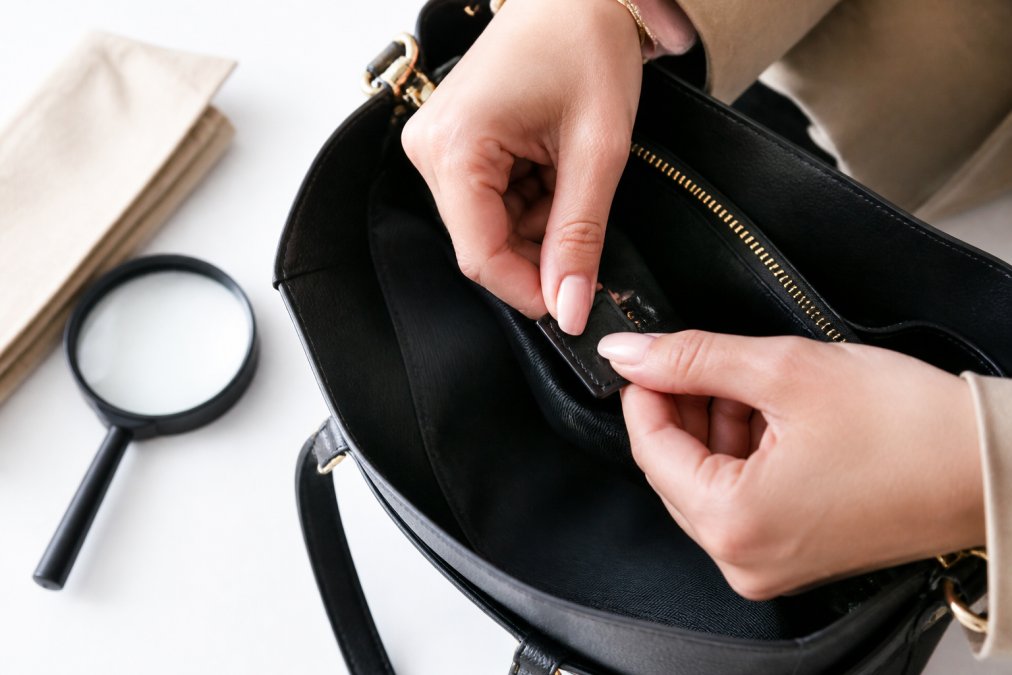
Stitching Quality, Font Consistency, and Heat Stamps
Stitching quality is the hardest detail for a counterfeiter to fake at scale. Look for even spacing, matching thread color, and clean turns at corners. Font consistency matters just as much: measure letter height against the brand's official logo, and check spacing between characters. A heat stamp should sit slightly raised above the leather with sharp edges. Blurry or shallow stamps point to a fake.
Serial Codes, Date Codes, and Hologram Stickers
Serial codes and date codes add another layer, but treat them as supporting evidence, not proof. A serial code is a unique identifier a brand prints or attaches to an item, often on an interior tag or label. Counterfeiters copy real codes from photos online, so a code that "checks out" online still proves little. Hologram stickers shift color when you tilt them and are difficult to reproduce cleanly.
When to Use Luxury Authentication Services
Luxury authentication services make sense when the stakes are high and your own checks are inconclusive. Professional authenticators compare stitching, hardware, and materials against reference items, and many provide a written opinion you can use in a dispute.
Use a paid service when:
- The item costs more than you can comfortably lose
- The seller offers no returns
- Your tag and hardware checks give mixed signals
- You need documentation for resale or insurance
Digital vs. Physical Verification Methods for Luxury Brand Tags
Digital verification methods are fast but limited. Physical inspection is slower but more reliable. Most buyers should combine both, but the order matters, and so does understanding why digital tools miss the fakes that matter most.
How Digital Verification Actually Works
Digital tag checks fall into a few categories, each with a different failure mode:
- Photo comparison. You compare a listing's tag photo against the brand's official logo, font, and tag layout. Fast and free, but it only catches fakes that got the visible details wrong.
- Serial and date code lookup. You check whether a code's format matches the brand's known patterns, or whether it appears in a public registry. Counterfeiters copy real codes from photos online, so a code that "checks out" proves little on its own.
- Hologram and optically variable element checks. You look for color shift, depth, and clean edges. Printed imitations fail this, but only if you can see the item in motion or under a light.
- Third-party authentication apps and marketplaces. Some platforms offer in-app tag scanning or community authentication. These vary widely in rigor and are best treated as a screening step, not a verdict.
Why Digital Tools Miss Superfakes
A "superfake" is a counterfeit built to pass casual inspection, often produced in the same regions and with access to similar materials as the genuine article. Counterfeiters who make superfakes invest in the details most buyers check least:
Armani Exchange T-shirt Color Blue M →
- They copy the logo and font accurately, because that is what shoppers look at first.
- They reproduce serial and date codes from real items, so registry lookups return a match.
- They replicate tag layout, care symbols, and even packaging to survive photo comparison.
A Practical Verification Sequence
- Screen with photos. Compare logo, font, tag layout, and code format against the brand's official references.
- Check the code. Look up the serial or date code, but treat a match as supporting evidence only.
- Inspect hardware and materials. Zipper weight, rivet engraving, leather hand, and heat-stamp relief.
- Verify holograms and color-shift elements in motion. Tilt the item under a light.
- Escalate to a professional authenticator when the item is high-value, the seller offers no returns, or your checks give mixed signals.
| Method | What It Checks | Speed | Best For |
|---|---|---|---|
| Photo comparison | Logo, font, tag layout | Minutes | Online listings |
| Serial code lookup | Code format, registry match | Minutes | Quick screening |
| Hologram check | Sticker shift, print quality | Seconds | In-person buys |
| Hardware inspection | Zipper, rivets, engraving | Minutes | Any purchase |
| Expert appraisal | Everything, with a report | Days | High-value items |
Digital tools catch obvious fakes. They miss good ones. That is why a verification process should always end with your hands on the item.
In-Person vs. Online Tag Inspection: A Quick Comparison
In-person inspection gives you the full picture: weight, smell, texture, and how the hardware feels in your hand. Online inspection relies on photos, so you must ask for the right shots, and you must know which shots actually matter for the brand you are buying.
What You Can Only Confirm in Person
Some tag and hardware features cannot be verified through a photograph, no matter how good the camera is:
- Hardware weight and feel. A genuine zipper pull has heft and a smooth, damped glide. Counterfeit hardware is often light, gritty, or sticks mid-track.
- Leather and coated-canvas hand. Real leather warms to the touch and creases with a fine grain; most faux leather stays cool and creases in sharp, plastic-looking folds.
- Hologram and color-shift elements. Tilt the item under a light. Genuine holograms and optically variable elements shift hue and depth; printed imitations look flat from every angle.
- Heat-stamp relief. Run a fingertip across a leather patch. A real heat stamp sits slightly raised with crisp edges; a fake feels flat or smudged.
- Thread and edge paint. Look at the tag's perimeter stitching and any painted edges. Even spacing and clean turns are hard to fake at scale.
What You Can Verify From Photos, If You Ask Correctly
Online, you are trusting someone else's camera, so request a specific shot list rather than a vague "more pictures." Ask for:
- Front and back of every tag, shot straight-on under even light, no angles, no filters.
- A macro shot of the logo and font, so you can compare letter height, spacing, and serifs against the brand's official mark.
- The serial, date, or style code, photographed clearly enough to read every character.
- The interior label, including care symbols and fiber content.
- The zipper pull and any engraving, plus rivets and hardware stamps.
- A short video tilting the item so holograms, color-shift inks, and hardware finish are visible in motion.
How the Channel Should Change What You Pay
- Prefer sellers with returns. A no-return online listing removes your only remedy if the tag fails inspection on arrival.
- Pay with a method that offers dispute rights. Credit cards and major payment platforms give you a path to recover funds if the item is misrepresented.
- Discount for uncertainty. If you cannot verify hardware weight or hologram shift before purchase, factor that into what you are willing to pay.
- Inspect on arrival, immediately. Photograph the tag, code, and hardware the moment the package arrives, before you remove any tags or wear the item.
In person, you can tilt a hologram, feel the leather texture, and check the weight of the zipper hardware. Online, you are trusting someone else's camera. That difference should shape how much you pay and how quickly you inspect once the item lands.
The Psychology of Counterfeiters and the Legal Risks of Buying Fakes
Counterfeiters target the details buyers check least. They know most shoppers glance at the logo and move on, so they invest in the logo and cut corners everywhere else. Understanding that mindset turns you into a harder target: check the boring parts, and the fakes reveal themselves.
Frequently Asked Questions
What website can I use to authenticate luxury items?
Several online authentication services let you upload photos of tags, serial codes, and hardware for expert review. Some brands also offer in-store verification. For a free starting point, check the brand's official website for tag format guides. If you're buying from a reseller, ask for high-resolution photos of the interior tag, date code, and zipper hardware before committing. Reputable sellers expect these requests and provide clear images.
Do all authentic luxury items have serial numbers?
No. Not every luxury brand uses serial numbers, and formats change by season and product line. Some brands rely on date codes, hologram stickers, or heat stamps instead. A missing serial number alone does not prove an item is fake, but an incorrectly formatted one is a strong red flag. Always cross-check the tag's font, spacing, and placement against known authentic examples for that specific brand and year.
What are the most common signs of a fake designer tag?
Watch for uneven stitching around the tag, blurry or misspelled brand names, inconsistent font weight, and cheap-looking hardware. Authentic tags use clean embroidery, precise letter spacing, and quality materials that match the garment. A tag that feels stiff, peels at the edges, or uses a generic font is suspicious. Compare the tag against photos from the brand's official website or a verified luxury resale platform before you buy.
How do I check if my LV is authentic?
Start with the date code, which is stamped inside a pocket or along a seam. Check the font consistency and spacing against known authentic examples. Examine the stitching: authentic Louis Vuitton uses even, tight stitches with consistent thread color. The hardware should feel solid and have clean engraving. If the item has a heat stamp, the letters should be crisp and evenly pressed. When in doubt, pay for a professional authentication service.
Counterfeit tags keep getting better, and that makes buying secondhand a real risk. LFC DESIGNS ONE removes the guesswork by selling authentic designer apparel that arrives brand new with original tags, backed by free shipping and a curated selection of exclusive picks. Browse the collection and shop now to elevate your wardrobe with pieces you never have to second-guess.