
Alternatives to Expensive Designer Authentication Services
Table of Contents
- Why Designer Authentication Costs So Much (and What It Actually Checks)
- How to Spot Fake Designer Sneakers Without Paying for a Service
- Free and Low-Cost Tools for Verifying Luxury Brand Authenticity
- Where to Find Authentic Designer Sneakers for Men Without Authentication Fees
- The Cost-Benefit Analysis: When DIY Checks Are Enough and When to Pay
- Legal Recourse for Counterfeits: What Buyers Can Actually Do
- Frequently Asked Questions
Last Updated: September 21, 2026
Why Designer Authentication Costs So Much (and What It Actually Checks)
Designer authentication is the process of verifying that a luxury item was genuinely produced by the brand it claims to represent. Professional authentication services charge for trained eyes, brand-specific reference libraries, and the liability they assume when they issue a verdict. This guide from LFC DESIGNS ONE breaks down what those fees actually buy, and where you can reasonably skip them.
What a Professional Authentication Report Includes
A standard report documents the item's identifying details, photographs of key construction points, a pass/fail or inconclusive verdict, and the authenticator's reasoning. Some services add a certificate of authenticity with a unique reference number that a future buyer can verify online.
What the Authenticator Actually Examines
A trained authenticator runs the same categories of checks you would, but with brand-specific reference points most buyers do not have. The core inspection areas are:
- Construction and stitching: Stitch count per inch, thread tension, seam alignment, and whether the pattern matches across panels. Brands have house standards here, and replicas drift from them.
- Hardware and engraving: Font, depth, and placement of logos on zippers, clasps, and rivets. A single wrong letterform can flag a fake.
- Date codes and serials: Format, placement, and whether the code corresponds to a real production run. Authenticators cross-reference these against brand records and known-good archives.
- Materials and linings: Leather grain, canvas weave, interior lining fabric, and the smell and hand-feel of the material. These are hard to fake at scale.
- Labels and heat stamps: Font, spacing, and stamping method on interior tags. Genuine stamps are typically clean and consistent; replicas show bleed or uneven pressure.
Common Pricing Models and Turnaround Times
Most providers price per item, with faster turnaround costing more. A basic email-based check typically takes several business days, while a rushed assessment compresses that window considerably. Pricing depends on the brand, the item category, and how detailed a report you request, so check each provider's current rates directly rather than relying on outdated figures.
How to Spot Fake Designer Sneakers Without Paying for a Service
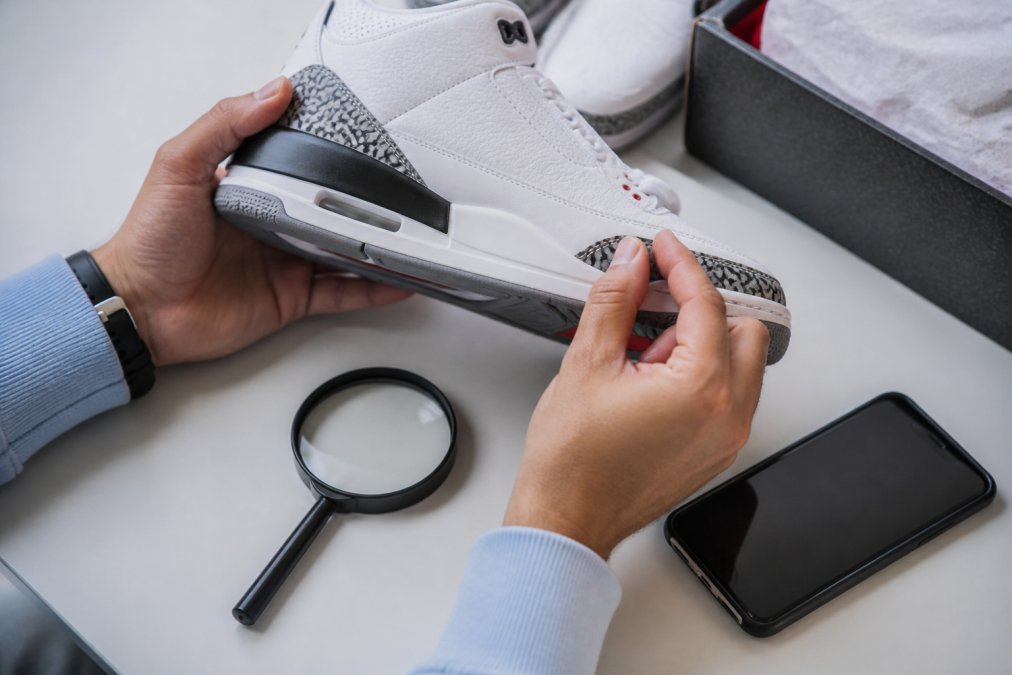
Most ranking guides tell you to 'check the stitching' and stop there. This section is different: it is a free, ordered checklist you can run in about ten minutes per pair, with the specific failure points counterfeiters keep getting wrong. Work top to bottom, later steps assume the earlier ones passed.
Step 1: The Box, Tags, and Paperwork
Start with what is easiest to fake and easiest to verify. Genuine pairs ship with a box whose label matches the shoe's style code, size, and colorway exactly. Check three things:
- Box label vs. shoe label: The style code (a short alphanumeric string) must match on both. Mismatches are the single most common giveaway on resale listings.
- Hang tags and extra laces: Authentic pairs include the correct number of spare laces, a branded hang tag, and often a dust bag. Missing accessories are a soft signal, not proof, but combined with a label mismatch, they are decisive.
- Receipt or order confirmation: A seller who can produce the original purchase record removes most of your risk. A seller who 'lost it' is asking you to trust them instead.
Step 2: Stitching, Hardware, and Material Quality Checks
Counterfeiters get the silhouette right and the details wrong. Check these before anything else:
- Stitching: Genuine pairs run even, tight, and consistent, typically 8 to 10 stitches per inch on visible seams. Replicas show wavy lines, loose threads, or uneven spacing at stress points like the heel collar and toe box.
- Hardware: Zippers, eyelets, and buckles should have weight and clean engraving. Lightweight hardware with blurred lettering is a red flag. On sneakers, look at the eyelet rims, genuine ones are stamped cleanly, replicas often show a seam or rough edge.
- Materials: Leather should feel supple with a natural grain. Synthetic substitutes feel plasticky and crease unnaturally. On knit uppers, check the weave density, replicas often use a looser, shinier yarn.
- Sole and midsole: Genuine midsoles have consistent foam density and clean mold lines. Squeeze the heel, a genuine pair rebounds; a cheap replica stays compressed.
Step 3: Serial Number Verification and Provenance Red Flags
Serial number verification means matching the code inside the shoe against the brand's own records or a known-good reference. Duplicated serial numbers across listings are one of the clearest counterfeit signals, search the code and see if it appears on multiple sellers' pages.
Paying via gift cards, wire transfer, or peer-to-peer apps with no purchase protection removes your ability to dispute a counterfeit. Once that money leaves, recovery is effectively impossible.
Step 4: Score the Pair Before You Decide
Give each of the four steps a pass or fail. Two or more fails means walk away or escalate to a paid authenticator. One fail on a low-value pair from a seller with returns is usually survivable; one fail on a high-value pair is not. This scoring step is what separates a real checklist from a vibe check, and it is the part most guides skip.
Free and Low-Cost Tools for Verifying Luxury Brand Authenticity
Community knowledge and AI-assisted checks have closed much of the gap with paid services, especially for common models. Tools for verifying luxury brand authenticity now range from free forums to low-cost digital platforms.
Online Authentication Platforms and AI-Assisted Checks
Several platforms offer photo-based assessments at a fraction of traditional pricing, and some use image-matching against large databases of known items. These work best for high-volume models where the platform has deep reference data. For rare vintage luxury pieces, human expertise still wins.
Community Forums and Social Media Verification Groups
Dedicated forums and social media groups let you post photos and get feedback from collectors who handle these items daily. The trade-off is reliability: you are getting opinions, not a guarantee. Use community input as a first filter, then escalate to a paid service if the item is expensive.
Where to Find Authentic Designer Sneakers for Men Without Authentication Fees
The cheapest authentication is the one you never need. Buying from a reseller who already verifies stock and backs it with a return policy removes the fee entirely. Authentic designer sneakers for men are widely available from sellers who build verification into their sourcing.
What to Look for in a Trusted Reseller
A trustworthy reseller shows original tags, provides detailed photos, and answers questions about sourcing without hesitation. LFC DESIGNS ONE stocks brand-new designer apparel and sneakers that arrive complete with their original tags, which gives you a documented starting point for any independent check you want to run.
Return Policies and Money-Back Guarantees That Protect You
A clear return window matters more than any certificate. If a seller offers a money-back guarantee and honors it without friction, the authentication risk shifts to them. Read the policy before buying, and confirm it covers authenticity disputes, not just sizing.
| Buying Route | Upfront Cost | Protection Level | Best For |
|---|---|---|---|
| Paid authentication service | Per-item fee | High, written verdict | High-value or rare items |
| Free community check | None | Low, opinion only | Common models, first filter |
| Verified reseller with returns | Built into price | High, refund-backed | Everyday purchases |
The Cost-Benefit Analysis: When DIY Checks Are Enough and When to Pay
Run the numbers before you pay for a report. If the item costs roughly what a professional assessment costs, the fee erases any savings. For lower-priced pieces from a seller with a solid return policy, DIY checks plus a refund window usually cover you.
Legal Recourse for Counterfeits: What Buyers Can Actually Do
Selling counterfeit goods is illegal, and buyers have real options. The FTC guidance on counterfeit goods explains that misrepresenting an item's origin is a deceptive practice. If you paid by credit card, you can file a chargeback for goods not as described. For larger losses, small claims court is a practical route, and reporting the seller to the [U.S.
Frequently Asked Questions
Are free online designer authentication services reliable?
Free online services can catch obvious fakes but often miss high-quality replicas. Many use AI image matching that struggles with subtle details like stitching density or hardware weight. They work best as a first filter, not a final verdict. For expensive items, combine free tools with a paid expert review or buy only from sellers who offer a money-back guarantee and clear return policies. Always cross-check serial numbers and provenance before committing.
What are the most common signs of a fake designer sneaker?
Look for uneven stitching, glue stains along the sole, misaligned logos, and cheap-smelling materials. Authentic sneakers have consistent stitching per inch, clean edges, and hardware that feels solid. Check the serial number inside the tongue against the brand's database. Fake boxes often have blurry printing or wrong font sizes. If the price is far below market value and the seller avoids close-up photos, treat it as a red flag.
How can I verify a luxury item's authenticity without a professional service?
Start with a DIY checklist: inspect stitching, hardware, material quality, and serial numbers. Use free online forums or AI tools for a second opinion. Request provenance details like original receipts or tags. Compare against photos from the brand's official site. For sneakers, check sole patterns and insole logos. If doubts remain, ask the seller for a video call inspection or buy from resellers that include certificates of authenticity and money-back guarantees.
Is it worth paying for designer authentication services?
It depends on the item's value and your risk tolerance. For a $2,000 handbag, a $20-$50 authentication fee is worthwhile insurance. For a $150 t-shirt, DIY checks and buying from trusted resellers with return policies make more sense. Many affordable alternatives exist: online platforms, community groups, and resellers that pre-verify items. If you buy frequently, building a relationship with a trusted seller who provides original tags and guarantees can eliminate the need for paid services.
Counterfeit risk is real, but paying a premium for verification on every purchase is not the only answer. LFC DESIGNS ONE offers authentic designer apparel and sneakers, new with original tags, free shipping to all USA, and a curated selection that lets you skip the guesswork. Shop now and elevate your wardrobe with pieces you can trust.