
Tips for Buying Authentic Designer Sneakers
Table of Contents
- Why Counterfeit Sneakers Are So Hard to Spot
- How to Spot Fake Designer Shoes: Physical Inspection Guide
- Luxury Sneaker Authentication Checklist
- Best Places to Buy Authentic Designer Sneakers
- Digital Authentication Tools and App-Based Verification
- Payment Protection and Post-Purchase Verification
- Common Mistakes to Avoid When Buying Authentic Designer Sneakers
- Conclusion
- Frequently Asked Questions
Last Updated: September 20, 2026
Why Counterfeit Sneakers Are So Hard to Spot
Counterfeiters have gotten very good at their craft. Modern fakes often look nearly identical to the real thing at a glance, which is why buying authentic designer sneakers requires more than a quick visual check.
Fakes now use real leather and copy box designs, dust bags, and authenticity certificates, so "just feel the leather" no longer works.
How to Spot Fake Designer Shoes: Physical Inspection Guide
The best way to spot fake designer shoes is to inspect the details counterfeiters consistently get wrong. Generic advice, "check the stitching, feel the leather", only gets you so far, because top replicas pass those surface tests. What separates real from fake is usually a brand-specific detail: a font weight, a date-code format, a hardware stamp.
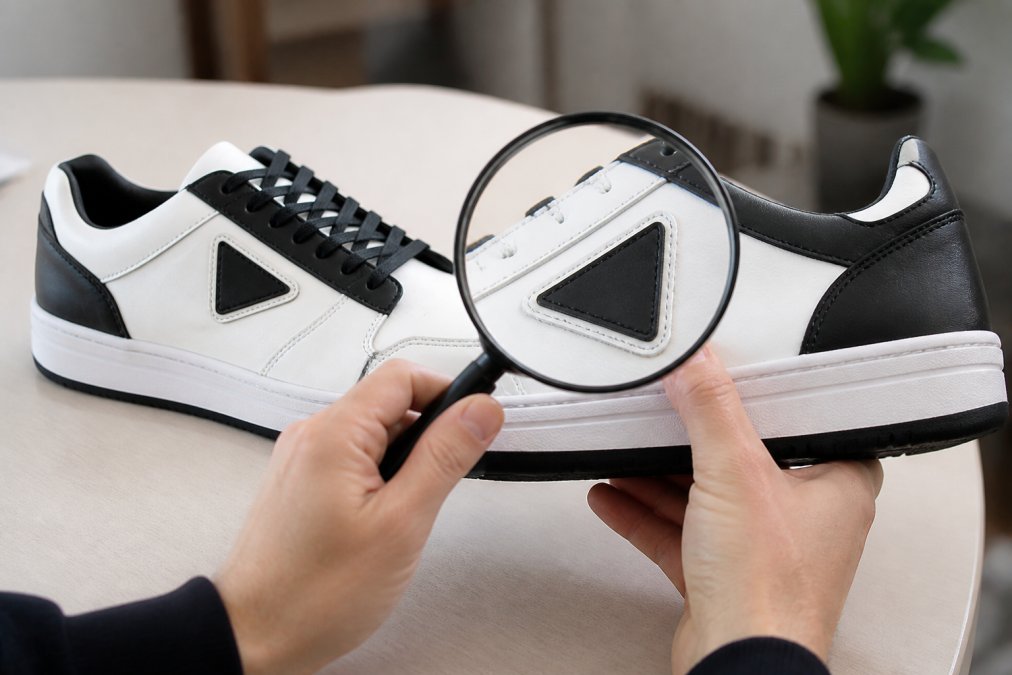
Start with these three areas on any pair:
- Stitching quality and pattern consistency
- Material texture and weight
- Logo alignment and font accuracy
Check Stitching, Material Quality, and Logo Alignment
Real designer sneakers have even, tight stitching with no loose threads. Count stitches per inch on both shoes, they should match exactly, with thread flush against the leather.
Fake pairs often have:
- Uneven stitch spacing
- Loose or frayed thread ends
- Glue visible along seams
- Stitching that stops short of a curve or corner
Verify Serial Numbers, Internal Tags, and Hardware Finish
Every authentic designer sneaker has a serial number or style code, usually inside the tongue, on a tag under the insole, or on the heel lining.
Check these details:
- Serial number matches between shoes
- Internal tag font is crisp, not blurry
- Hardware (eyelets, zippers, lace tips) feels solid and heavy
- Sole pattern is clean, with no excess glue or misaligned tread
Brand-Specific Quirks That Trip Up Counterfeiters
If you can't verify a brand-specific detail, slow down, don't assume the pair is real.
Luxury Sneaker Authentication Checklist
A luxury sneaker authentication checklist is a step-by-step set of inspections you run before buying or accepting a pair, covering physical details and seller verification.
Print this or save it on your phone:
- Stitching is even and matches on both shoes
- Leather wrinkles naturally and springs back
- Logo is centered, straight, and correctly spaced
- Serial number matches on both shoes
- Internal tag font is sharp and clean
- Hardware feels solid, not hollow
- Sole pattern is clean with no excess glue
- Box, dust bag, and accessories match the brand's standards
- Seller offers buyer protection through a traceable payment method
Best Places to Buy Authentic Designer Sneakers
The safest sources for authentic designer sneakers are authorized retailers, brand-owned stores, and established resellers with clear authentication processes. Where you buy matters as much as what you buy.
Here's how the main options compare:
| Source | Authentication Process | Buyer Protection | Price Range |
|---|---|---|---|
| Authorized retailers | Guaranteed authentic | Full return policy | Retail price |
| Brand boutiques | Guaranteed authentic | Full return policy | Retail price |
| Trusted resellers | Third-party verified | Varies by seller | Below retail |
| Marketplaces | Inconsistent | Platform-dependent | Highly variable |
| Social media sellers | None | Usually none | Often too low |
Why Authorized Retailers and Trusted Resellers Matter
Authorized retailers buy directly from the brand, so there's no middleman and no chance of a fake slipping in. Trusted resellers buy from individuals and other sellers, then verify each pair, the best publish their authentication process and offer returns if something turns out to be fake.
Puma Men's Sneakers Shoes Color Blue →
When shopping resale, look for:
- A written authentication guarantee
- Clear return and refund terms
- Real photos of the actual pair, not stock images
- A traceable payment method
Digital Authentication Tools and App-Based Verification
Digital authentication tools use AI and photo analysis to check sneakers against known real pairs. Apps like CheckCheck and Legit Check let you upload photos and get a verdict within minutes.
Here's how the process usually works:
- Take clear photos of the shoe from multiple angles
- Upload them to the app
- Pay a small fee per check
- Get a pass, fail, or inconclusive result
Payment Protection and Post-Purchase Verification
The right payment method protects you if a pair turns out to be fake. A PayPal invoice or credit card gives you a paper trail and a way to dispute the charge, but only if you know the rules and deadlines, and verify the pair the moment it arrives.
Avoid these payment methods:
- Cash transfers
- Gift cards
- Cryptocurrency
- Peer-to-peer apps with no buyer protection
- Wire transfers
How the Dispute Process Actually Works
Most buyers never file a dispute, so they don't know the mechanics until it's too late. Here's what to expect.
Post-Purchase Verification: What to Do the Day the Box Arrives
Don't wait weeks to inspect a pair. Verify within the return window, ideally the same day it arrives, while packaging and tags are still intact.
Run this sequence:
- Photograph everything before you open it. The shipping label, the box exterior, the box label, and the contents as you unpack them. This is your evidence if you need to dispute.
- Compare the pair to the listing photos. Check the serial number, the colorway, the size, and any unique details the seller showed.
- Run the physical checks. Stitching, materials, logo alignment, serial numbers, hardware, the same checklist you'd use before buying.
- Run a digital authentication check. Upload photos to an app or send them to a professional service. Keep the result.
- Test the packaging and accessories. Box label, dust bags, extra laces, and any documentation should match the brand's standards.
If You Suspect a Fake After the Return Window
Sometimes you don't realize a pair is fake until months later. You still have options, though they're narrower.
- Contact the brand. Some luxury houses will inspect a pair and confirm authenticity in writing, which can support a dispute or a resale claim.
- Contact your state attorney general's consumer protection office. If a seller is running a pattern of fraud, this can escalate beyond a single transaction.
- Report to the FTC. The Federal Trade Commission's online shopping guide explains your rights when an item doesn't match its description, and the FTC accepts reports on counterfeit sales.
- Leave a detailed review. On resale platforms, a documented review with photos can warn other buyers and sometimes prompts the platform to act.
Common Mistakes to Avoid When Buying Authentic Designer Sneakers
Most buyers get burned for the same few reasons. Avoiding these mistakes saves money and frustration.
- Trusting a low price. If a pair is far below retail, ask why. Real deals exist, but deep discounts on new, in-demand pairs usually signal a fake.
- Skipping the seller's history. Check reviews on multiple platforms. One good review means nothing.
- Ignoring the packaging. Missing dust bags, wrong box labels, or no accessories are warning signs.
- Paying without protection. Never send money you can't get back.
- Not checking after delivery. Verify the pair within the return window, not weeks later.
Conclusion
Spotting fakes takes practice, but the process is simple once you know what to check. Stitching, materials, serial numbers, and payment protection do most of the work.
Frequently Asked Questions
How can you tell if designer sneakers are real?
Start with the stitching: authentic pairs have tight, even lines with no loose threads. Check the logo alignment and font consistency against official brand images. Look for a serial number or internal tag that matches the style. Feel the material quality, genuine leather has a natural grain and softness that synthetic materials lack. Authentic sneakers also come with original packaging, a dust bag, and sometimes an authenticity certificate. If the price is far below retail, treat it as a red flag.
Is it safe to buy designer sneakers from secondary marketplaces?
Secondary marketplaces can be safe if you take precautions. Use platforms that offer buyer protection, such as PayPal invoice, which lets you dispute a transaction if the item is counterfeit. Research the seller's reputation and read reviews. Ask for detailed photos of the stitching, serial number, and packaging before buying. Avoid sellers who pressure you to pay outside the platform. Even on trusted sites, a luxury sneaker authentication checklist helps you verify what arrives.
Do all authentic designer sneakers come with a certificate of authenticity?
Not always. Many brands do not include a separate certificate; instead, authenticity is shown through original tags, serial numbers, and packaging. Some resellers provide third-party authentication certificates, but these are not issued by the brand itself. Focus on physical markers like font consistency, hardware finish, and sole pattern. If a seller claims a certificate is the only proof, ask for additional photos and verify the serial code with the brand when possible.
What should I look for in the packaging of authentic designer sneakers?
Authentic sneakers typically arrive in the original brand box with correct logos and fonts. Inside, you should find a dust bag, extra laces (if applicable), and tissue paper. Check that the box label matches the shoe size and style code. Missing or mismatched packaging is a common sign of counterfeit. If you buy online, ask the seller to send photos of the box and all accessories before you pay. Post-purchase, keep the packaging in case you need to verify or return.