
Does Expensive Designer Clothing Last Longer?
Table of Contents
- Does Expensive Designer Clothing Last Longer? The Honest Answer
- How to Identify High Quality Clothing: Construction Details That Matter
- Cost Per Wear: The Math That Actually Matters
- Is It Worth It to Buy Expensive Clothes? When Luxury Pays Off
- Luxury Markup vs. Real Quality: Where Your Money Goes
- How to Care for Designer Apparel So It Lasts
- Smart Buying: Designer Pieces Worth the Investment
- Frequently Asked Questions
Last Updated: October 4, 2026
Does Expensive Designer Clothing Last Longer? The Honest Answer
Yes, but not always for the reasons the price tag suggests. A higher retail price buys better raw materials, tighter quality control, and stronger garment construction, but not automatically a longer life. Some expensive designer clothing outlasts mass-market pieces by years; some falls apart just as fast.
At LFC DESIGNS ONE, we sell authentic designer apparel and hear this question constantly. The short version: price correlates with durability, but does not guarantee it. The construction details below are what actually predict how long a garment survives.
Here is the part most buyers miss: the relationship between price and lifespan is not linear. Past a certain point, you are paying for brand equity and prestige, not extra durability.
How to Identify High Quality Clothing: Construction Details That Matter
You can judge most garments in under a minute by checking four things: fabric composition, stitch density, seam reinforcement, and how the piece is cut. None require a label to verify. What separates a piece that survives a decade from one that pills in a season comes down to fiber mechanics and hardware, the technical layer most buying guides skip.
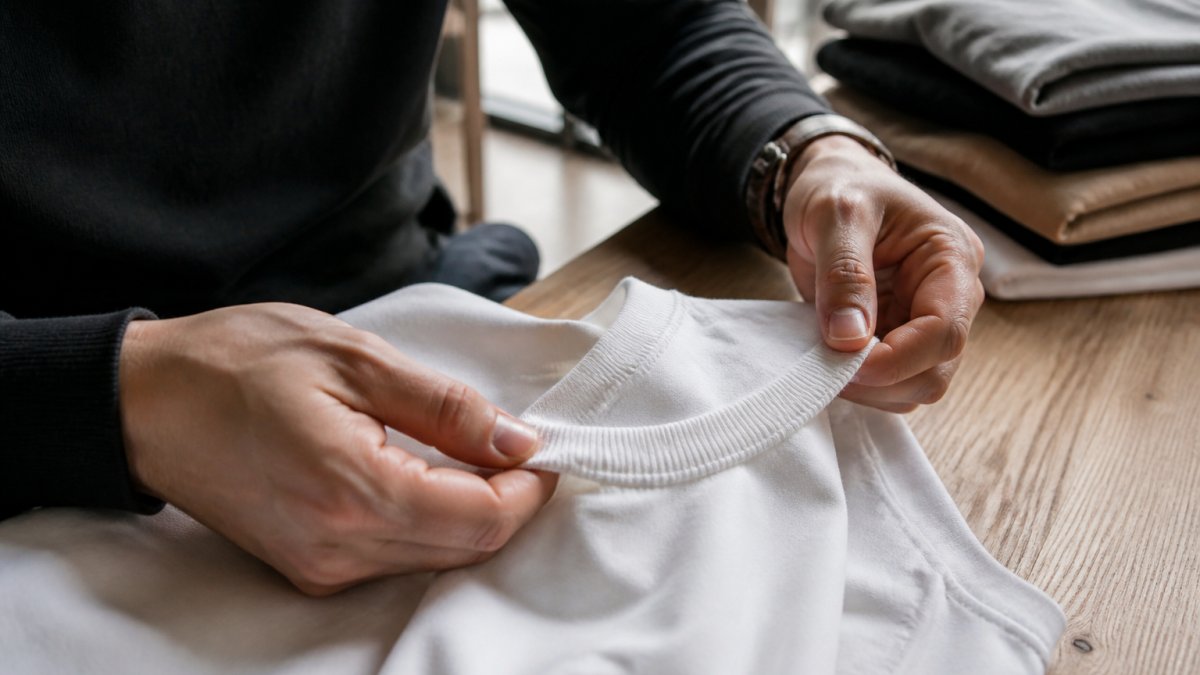
Fabric Composition and Textile Integrity
Natural fibers like cotton, wool, linen, and silk generally hold up better over repeated washing than synthetic blends, though blends help with stretch and shape retention.
The reason is structural.
Wool behaves the same way. Merino and other fine wools have a natural crimp that lets the fiber stretch and recover, pull a merino sweater and it springs back.
Synthetics are not automatically inferior. Polyester is abrasion-resistant and holds color well, which is why it dominates activewear and outerwear, though it does not breathe and holds odor-causing bacteria.
Textile integrity matters more than fiber type alone. A tightly woven cotton poplin resists pilling; a loosely knit jersey stretches at the collar.
Stitching, Seam Reinforcement, and Garment Construction
Look at the side seams and hem. A quality garment uses 10 to 12 stitches per inch; fast fashion often runs 6 to 8. Denser stitching resists splitting at stress points and lies flatter, which is one reason high-end garments look cleaner on the body.
Seam reinforcement is the tell. Bar tacks at pocket corners, double-stitched shoulder seams, and finished interior seams all signal a garment built to be worn. Turn the piece inside out, if the interior looks as clean as the exterior, you are looking at high-end manufacturing.
Hardware deserves the same scrutiny. Zippers are the most common failure point on jackets and denim; a metal zipper from YKK, Riri, or Lampo will outlast a generic plastic one by years.
Cut and Pattern: The Invisible Durability Factor
Cut matters more than most buyers realize. A garment cut with extra seam allowance can be let out or taken in as your body changes, extending its useful life; one cut tight to the pattern has no room to alter. If there is a half-inch or more of fabric beyond the stitch line inside a hem or side seam, the piece was built with alteration in mind.
Grain alignment is the other invisible signal. On a well-cut garment, the fabric's vertical and horizontal threads run parallel to the seams; on a cheaply cut one, the grain runs diagonally and the garment twists after washing. Lay a shirt flat, if the side seams spiral toward the front, the fabric was cut off-grain, and no amount of careful washing will fix it.
Cost Per Wear: The Math That Actually Matters
Cost-per-wear is the purchase price divided by the number of times you actually wear the item. A $30 shirt worn five times costs $6 per wear. A $120 shirt worn 200 times costs $0.60 per wear.
That math flips the entire "expensive vs. cheap" debate. The cheaper garment is often the more expensive one.
| Garment | Price | Wears Before Failure | Cost Per Wear |
|---|---|---|---|
| Mass-market tee | $15 | 25 | $0.60 |
| Mid-tier branded tee | $40 | 100 | $0.40 |
| Designer tee | $120 | 300 | $0.40 |
Notice the pattern: the jump from $15 to $40 cuts cost per wear, but the jump from $40 to $120 often does not. This is where the diminishing returns threshold enters the picture.
Is It Worth It to Buy Expensive Clothes? When Luxury Pays Off
Expensive clothing pays off when three conditions line up: you wear the piece often, the construction genuinely justifies the price, and the style will not look dated in two years. Miss any one and the math stops working in your favor.
The Diminishing Returns Threshold
The diminishing returns threshold is the price point where extra spending stops buying extra durability. Past it, you are paying for brand equity, exclusivity, and prestige, not longer life.
The mechanism is straightforward. Durability is a function of fiber quality, yarn construction, stitch density, seam finishing, and hardware grade, and each input has a practical ceiling.
Armani Exchange T-shirt Color Blue M (ORIGINAL WITH TAGS) →
For basics like t-shirts and polos, that threshold tends to sit in the mid-tier range. A $200 tee does not outlast a $50 one by four times, maybe by 20 percent. The rest of the price is luxury markup.
To locate the threshold for any category, ask what the most durable realistic version of that item looks like.
Where the Threshold Sits by Category
The threshold differs by garment type, because the inputs that drive durability differ.
- T-shirts and basics: The threshold is low. Once you are past long-staple cotton and a reinforced collar, extra spend buys fit, cut, and brand. Most buyers hit the ceiling well under the designer tier.
- Denim: The threshold is higher. Raw selvedge denim from a quality mill, chain-stitched hems, and copper rivets represent a real durability upgrade over mass-market denim, and the price gap reflects that. Above the selvedge tier, you are paying for fading potential, rarity, and brand heritage.
- Outerwear: The threshold is highest here, because hardware, lining, and shell fabric all scale with price in ways that genuinely extend life. A well-made wool overcoat or a technical shell with quality zippers and taped seams can justify a price several times a mass-market equivalent. This is the category where expensive most often means longer-lasting.
- Knitwear: The threshold sits at the fiber. Once you are at fine wool or cashmere of a quality grade, additional spend buys softness and rarity, not lifespan. In fact, very fine gauge knits can be more delicate than mid-weight ones.
- Shoes and leather goods: The threshold is high and tied to construction method. Goodyear-welted or Blake-stitched shoes can be resoled repeatedly, which extends life for decades. Cemented shoes cannot, regardless of price. Here, construction method matters more than brand.
This is not an argument against buying designer. It is an argument for buying designer basics where the construction actually earns the price, and buying trend pieces where it does not.
The Wear-Frequency Multiplier
Durability only pays off if you actually wear the garment. A $300 jacket worn twice a year costs $150 per wear in the first year. A $60 jacket worn weekly costs roughly $1.15 per wear over the same period. The expensive piece is only the better buy if it enters heavy rotation.
Before paying a premium, ask how many times per year you will realistically wear the item. Under ten, the durability argument collapses. Fifty or more, and the construction upgrade has room to pay for itself.
Luxury Markup vs. Real Quality: Where Your Money Goes
Every designer price tag splits into three buckets: material cost, labor and construction, and brand markup. The split tells you whether you are buying quality or paying for a name.
High-end manufacturing costs real money. Quality control, material sourcing, and skilled tailoring all add to the base cost. So does the brand's marketing, retail space, and prestige positioning.
The problem is that the split varies wildly by brand and product line. A designer's flagship line may use premium materials and construction, while the same brand's diffusion line puts the same logo on a cheaper build. The price does not always reveal which one you are holding.
How to Care for Designer Apparel So It Lasts
Care determines whether a well-built garment reaches its potential lifespan. The best-constructed shirt in the world fails early if you wash it wrong.
- Wash cold, inside out, on a gentle cycle to protect both fabric and print
- Skip the dryer for natural fibers; heat breaks down cotton and wool over time
- Use mesh laundry bags for anything with hardware or delicate stitching
- Store knits folded, not hung, so shoulders do not stretch
- Rotate your wardrobe so no single piece takes daily wear
A common mistake is over-washing. Most casual shirts do not need a wash after every wear. Spot-clean when you can, and air garments between wears.
Smart Buying: Designer Pieces Worth the Investment
The smartest purchases are wardrobe staples in durable fabrics from brands with consistent quality control. Think plain tees, polos, and classic cuts that survive trend cycles.
At LFC DESIGNS ONE, we stock authentic designer pieces that fit this profile, all brand new with original tags and free shipping. A few standouts:
- Armani Exchange T-shirt in blue and gold, size M at $56.99
- Tommy Hilfiger T-shirt in blue, size L at $38.99
- True Religion T-shirt in white, size XL at $38.99
Each piece arrives new with tags, so you can verify authenticity and construction before it enters your rotation. Customers like Lisa P. and James K. both noted the fit and quality held up as expected.


Frequently Asked Questions
Does expensive designer clothing last longer than mid-range brands?
It depends on construction, not price alone. Designer clothing often uses better fabric composition, reinforced seams, and stricter quality control, which can extend wear life. But markup for brand equity sometimes outpaces actual durability gains. A well-made mid-range piece with strong garment construction can outlast a poorly constructed luxury item. Check fabric composition, seam reinforcement, and stitching density before assuming price equals longevity.
Is it worth it to buy expensive clothes?
Worth it when cost-per-wear drops below cheaper alternatives. A $56.99 Armani Exchange t-shirt worn 60 times costs about $0.95 per wear. A $15 fast fashion shirt worn 8 times costs $1.88 per wear. Investment pieces with timeless design (wardrobe staples like solid polos or classic tees) tend to justify their retail price through years of use, while trend-driven luxury items often do not.
How can you tell if a garment is built to last?
Look at four things: fabric composition (natural fibers like cotton hold up better than loose synthetic blends), seam reinforcement (double-stitched or flat-felled seams resist wear and tear), garment construction (pattern matching at stress points), and quality control markers like consistent stitching. These signals predict longevity better than the price tag alone.
How should I care for designer apparel to make it last?
Wash less often, cold water only, and inside out. Skip the dryer; air dry flat to protect fabric composition and shape. Use mesh laundry bags for t-shirts and polos to prevent snags. Store folded rather than hung for knits to avoid stretching. Address small repairs (loose seams, missing buttons) immediately. Proper care can double the lifespan of investment pieces.
The real challenge is not deciding whether expensive clothing lasts longer. It is finding authentic designer pieces at prices that keep cost per wear low. LFC DESIGNS ONE solves that with a curated selection of brand-new designer apparel, complete with original tags, free shipping across the country, and deals that make the math work in your favor. Shop now and build a wardrobe where every piece earns its keep.