
Alternatives to Popular Luxury Streetwear Brands for 2026
Table of Contents
- Why Shoppers Are Seeking Alternatives to Popular Luxury Streetwear Brands
- Price Tier Breakdown: Entry-Level vs. High-End Luxury Streetwear
- Quality vs Brand Name in Streetwear: What You're Really Paying For
- Best Designer Sneakers for Everyday Wear 2026
- How to Style Luxury Streetwear Staples for Different Body Types
- Resale Value and Investment Potential of Designer Streetwear
- Conclusion
- Frequently Asked Questions
Last Updated: October 2, 2026
Why Shoppers Are Seeking Alternatives to Popular Luxury Streetwear Brands
Shoppers are seeking alternatives to popular luxury streetwear brands because retail markups, limited sizing, and drop-culture scarcity have pushed well-made pieces out of reach for most wardrobes. This guide from LFC DESIGNS ONE covers what actually drives price, how to judge quality against a logo, and where to find authentic pieces at fair prices in 2026.
The shift is practical, not ideological. A shopper who wants a heavyweight cotton tee and a clean logo is often paying mostly for the name stitched on the chest. Once you understand how the luxury streetwear price ladder works, it becomes much easier to buy well without overpaying.
Price Tier Breakdown: Entry-Level vs. High-End Luxury Streetwear
Luxury streetwear splits into three broad price tiers, and the gap between them rarely reflects a matching gap in materials. Entry-level pieces usually land under $100, mid-tier runs roughly $100 to $400, and high-end labels push past $400 for comparable construction.
| Tier | Typical Retail | What You Usually Get | What You Usually Pay For |
|---|---|---|---|
| Entry-level | Under $100 | 5.5-6.5 oz cotton tees, basic screen prints, standard ribbed collars | Licensing, basic cut-and-sew, retail margin |
| Mid-tier | $100-$400 | 6.5-8 oz cotton, garment-dyed or washed finishes, reinforced seams, better hardware | Design, small-batch production, wholesale margin |
| High-end | $400+ | Premium mills (loopwheeled, long-staple cotton, Japanese selvedge), hand-finished details | Brand equity, flagship overhead, celebrity seeding, scarcity marketing |
What Retail Markup Actually Pays For
Retail markup on designer apparel covers far more than the garment. A large share goes to brand marketing, flagship real estate, celebrity seeding, and wholesale margins before the fabric is even considered.
- Brand marketing and campaigns: the largest single line item for most labels
- Retail overhead: rent, staffing, and visual merchandising in prime locations
- Wholesale margin: retailers typically take a substantial cut of the shelf price
- Actual materials and labor: usually the smallest portion of what you pay
Why the Same Cotton Costs Different Amounts
Fabric weight is measured in grams per square meter (gsm), and the difference between a 150 gsm fast-fashion tee and a 220 gsm mid-tier tee is real but modest in cost. Heavier cotton drapes better, holds its shape through more washes, and resists the see-through problem that plagues thin knits.
How to Read a Price Tag Before You Buy
Use the tier table as a filter, then ask three questions:
- Is the fabric weight listed? If a brand won't publish gsm or oz, assume entry-level construction regardless of price.
- Is the production origin disclosed? Made-in-Portugal, Japan, and USA carry different labor and shipping costs than undisclosed sourcing.
- Is the price anchored to a drop or a permanent collection? Drop pricing often includes scarcity premium that has nothing to do with the garment.
Quality vs Brand Name in Streetwear: What You're Really Paying For
Quality in streetwear comes down to construction and textile, not the logo. Two shirts can carry the same designer name and differ wildly in stitch density, seam finishing, and how the fabric holds up after ten washes.
Garment Construction and Textile Quality Checklist
Use this checklist before buying any designer piece, online or in person:
- Fabric weight: heavier cotton (roughly 180-220 gsm) drapes better and lasts longer
- Stitch density: tight, even stitching along seams signals better construction
- Seam finishing: flatlock or reinforced seams resist fraying
- Print or embroidery quality: embroidery should sit flat; prints should not crack when stretched
- Hardware: zippers and buttons should feel solid, not flimsy
- Original tags: authentic pieces arrive new with original tags, which also helps resale
Best Designer Sneakers for Everyday Wear 2026
The best designer sneakers for everyday wear in 2026 are low-profile leather and suede styles with neutral colorways, because they pair with almost any outfit and resist trend cycles. Skip the loudest silhouettes unless you specifically want a statement piece.
For daily rotation, prioritize:
- Clean leather or suede uppers in white, black, or gray
- Rubber cup soles for comfort and durability
- Minimal branding, which ages better than logo-heavy designs
How to Style Luxury Streetwear Staples for Different Body Types
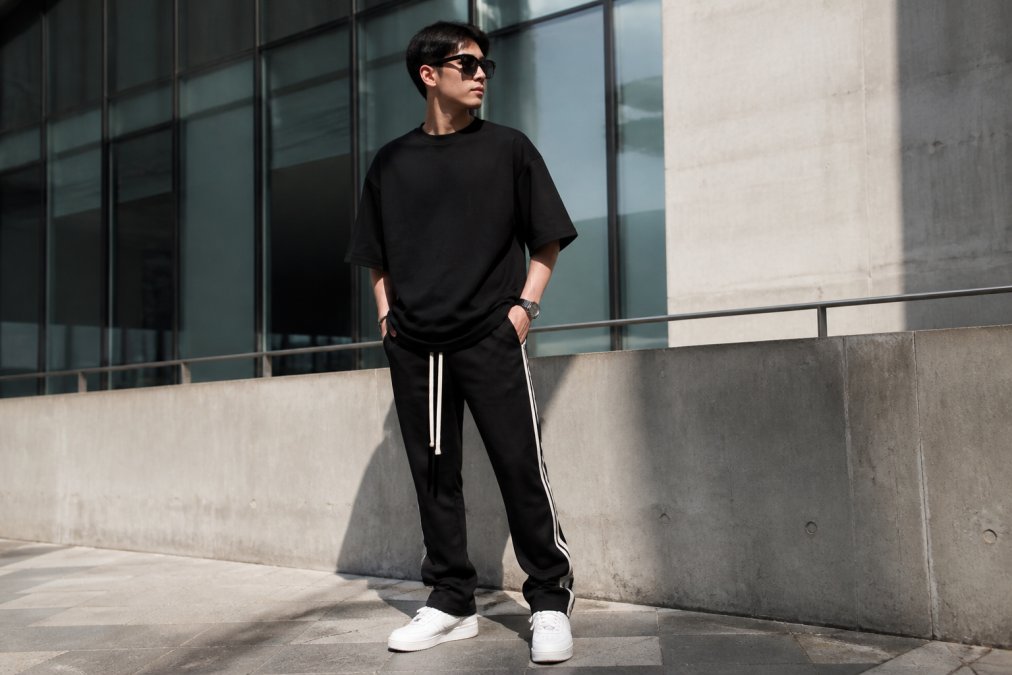
Styling luxury streetwear staples is really about proportion, not size. Oversized silhouettes flatter when you balance volume in one area against a cleaner line elsewhere, and that rule holds whether you're tall, short, broad, or slim.
A few practical starting points:
Karl Lagerfeld Men's T-shirt Size →
- Shorter frames: pair an oversized top with a slimmer bottom to avoid being swallowed by fabric
- Taller frames: layer longer tops over wide-leg bottoms to use your height
- Broader builds: choose structured shoulders and straight-leg pants for a cleaner line
- Slimmer builds: use layering to add visual weight without bulk
Building a Capsule Wardrobe With Oversized Silhouettes
A capsule wardrobe built on oversized pieces works best with a tight color palette and a few high-quality anchors. Start with neutral tees, one track jacket, one pair of clean sneakers, and a structured pant, then swap in statement pieces seasonally.
Resale Value and Investment Potential of Designer Streetwear
Resale value in designer streetwear depends on three things: brand heritage, scarcity, and condition. Pieces from established houses with limited production tend to hold value, while mass-produced logo items often resell for a fraction of retail. Most guides stop there. The useful part is the math.
The Real Depreciation Curve
A common pattern is that a new-with-tags piece from a mid-tier designer label resells for roughly 40-70% of retail on the secondary market, while the same piece worn a few times drops to 20-40%. High-end pieces from heritage houses with tight production can hold closer to retail or exceed it, but that is the exception, not the rule. Treat any single piece as a depreciating asset unless it is genuinely scarce.
Where Resale Actually Happens
Different platforms serve different buyers, and each takes a different cut:
- Peer-to-peer marketplaces: broad reach, buyer-protection fees, and authentication risk falls partly on you
- Consignment and authentication-first platforms: higher fees, but they handle verification and disputes
- Specialty sneaker and streetwear resellers: strongest for hyped drops, weakest for basics
- Local buy-sell-trade and consignment shops: lower fees, smaller audience, faster cash
What Actually Holds Value
- Condition is everything: new-with-tags pieces command the strongest resale
- Neutral colorways outsell loud seasonal prints
- Classic silhouettes outlast trend-driven drops
- Authenticity proof (original tags, receipts) protects your resale price
- Size run matters: common sizes move faster; extreme sizes sit longer and sell lower
The Trade-Off Nobody Mentions
Treat resale as a bonus, not the reason to buy. The best wardrobe purchases are the ones you actually wear, and pieces you wear tend to show wear that erases resale value anyway. If you buy a piece you love and wear it for years, the cost-per-wear math usually beats the resale math. If you buy a piece you are afraid to wear, you have bought inventory, not clothing.
A Simple Buy-for-Resale Checklist
Before paying a premium on the assumption of future value, ask:
- Does this brand have a documented secondary market, or only a primary one?
- Is this a permanent collection piece or a one-time drop?
- Can I resell it within 90 days without losing more than 30%?
- Would I still want it if it were worth nothing on resale?
Conclusion
Finding alternatives to popular luxury streetwear brands comes down to knowing what you're paying for and refusing to pay for a logo alone. LFC DESIGNS ONE stocks authentic designer apparel, including tees from Karl Lagerfeld, Adidas Originals, and True Religion, all brand new with original tags and free shipping across the USA. Shop the curated edit at LFC DESIGNS ONE and build a wardrobe that holds its value and its shape.

Frequently Asked Questions
What are the best alternatives to popular luxury streetwear brands that still deliver quality?
Look for brands with strong garment construction and textile quality rather than just a logo. Karl Lagerfeld t-shirts at $45.99 and True Religion tees at $38.99 offer premium aesthetic without the retail markup of high-end houses. Focus on pieces that fit your wardrobe staples and hold up after repeated washing, since fabric weight and stitching matter more than the label for everyday wear.
How can I find high-quality streetwear without the luxury price tag?
Start by comparing garment construction details like double-stitched hems and fabric weight, not just brand names. Adidas Originals t-shirts at $34.99 and True Religion tees at $38.99 deliver the same cotton quality as luxury labels that charge three times more. Check for original tags and authenticity markers, and prioritize pieces that work across multiple outfits in your capsule wardrobe.
Which emerging streetwear brands offer the same quality as luxury houses?
When evaluating any brand, check fabric weight, stitching consistency, and whether the piece fits your aesthetic cohesion rather than chasing limited edition drops that lose value quickly.
Are there sustainable alternatives to popular luxury streetwear?
Sustainable production is harder to verify than marketing suggests. Look for brands that disclose their ethical manufacturing partners and use durable materials that extend a garment's life. Buying authentic pieces with original tags from previous seasons, rather than new limited edition drops, reduces waste and often costs less. Quality construction means the piece stays in your rotation longer, which is the most practical form of sustainability.
What defines a luxury streetwear brand in 2026?
Luxury streetwear in 2026 is defined by aesthetic cohesion, textile quality, and cultural relevance rather than price alone. Brands like Karl Lagerfeld and True Religion blend brand heritage with contemporary fashion, offering oversized silhouettes and minimalist pieces that work as wardrobe staples. The real value proposition is style versatility: pieces that transition from casual to fashion-forward without needing a full outfit change.