
Best Comfortable Sneakers for All Day Standing in 2026
Last Updated: November 12, 2026
Quick Summary
The best comfortable sneakers for all day standing combine heel and forefoot cushioning, arch support that keeps your foot from collapsing, and a supportive fit that stops sliding. Our top picks are the Nike Structure 26 for hard floors and arch support, the Nike Quest 5 for lightweight everyday wear under $80, and the Puma Neutron for long shifts with extra-thick heel cushioning.
- The Nike Structure 26 costs $129.99 and lists adjustable arch support for hard floors.
- The Nike Quest 5 is $78.99 with a breathable mesh upper, foam insole and padded collar.
- The Puma Neutron at $81.99 features a SOFTFOAM+ sockliner with extra-thick heel cushioning.
- Press your thumb into the heel: if the foam stays dented, it will bottom out by hour four.
- Break in new shoes over four days, starting with two hours at home on carpet.
Table of Contents
- What Makes a Sneaker Comfortable for All Day Standing in 2026
- Quick Comparison: Comfortable Sneakers for Standing All Day
- Best Shoes for Walking and Standing All Day: Top Picks
- Podiatrist Recommended Shoes for Standing All Day: What to Look For
- Fashionable Shoes for Standing All Day That Still Look Sharp
- Best Comfortable Sneakers for All Day Standing Women's Sizing and Fit
- Break-In, Rotation, and Care Plan for All-Day Wear
- Shop Authentic Comfortable Sneakers at LFC Designs One
- Frequently Asked Questions
What Makes a Sneaker Comfortable for All Day Standing in 2026
Standing for eight hours is a different job than walking. Walking shifts your weight heel to toe, giving each foot a break; standing keeps the same pressure points loaded until your arches and heels complain. That is why the best comfortable sneakers for all day standing are not always the ones runners rave about.
All-day comfort is the ability of a shoe to keep pressure distributed and joints supported through hours of low-motion standing, not just the first mile of a walk. Three things drive it: cushioning under the heel and forefoot, support that keeps your arch from collapsing, and a fit that stops your foot from sliding.
Cushioning, Shock Absorption, and the Midsole Foam That Matters
Cushioning is the layer between you and the floor. The midsole foam compresses under your body weight and springs back, spreading impact across the whole foot instead of one hot spot.
Plush cushioning feels soft on contact; responsive cushioning returns energy and holds its shape longer. For standing, you want a balance: too soft and your foot sinks into a rut by midday, too firm and your heel takes the beating.
Arch Support, Heel Support, and a Supportive Fit
Arch support keeps the middle of your foot from flattening under sustained load. Heel support, usually a firm counter around the back of the shoe, stops the ankle from rolling and keeps the heel locked in place.
A supportive fit ties it together: your foot should not slide forward when you stop suddenly, and your toes need room to spread.
Quick Comparison: Comfortable Sneakers for Standing All Day
Here is how our three picks stack up. Every pair is brand new, comes with its original box, and ships free within the USA.
| Sneaker | Price | Cushioning | Best For | Standout Feature |
|---|---|---|---|---|
| Nike Structure 26 | $129.99 | Soft Foam+ midsole | Hard floors, arch support | Adjustable arch support |
| Nike Quest 5 | $78.99 | Foam insole, padded collar | Budget everyday wear | Breathable mesh upper |
| Puma Neutron | $81.99 | SOFTFOAM+ sockliner | Long shifts, step-in comfort | Extra-thick heel cushioning |
Price
Best Shoes for Walking and Standing All Day: Top Picks
The best shoes for walking and standing all day combine heel cushioning, arch support, and a light enough build that your legs are not dragging by the end of a shift. Each pick below solves a different problem.
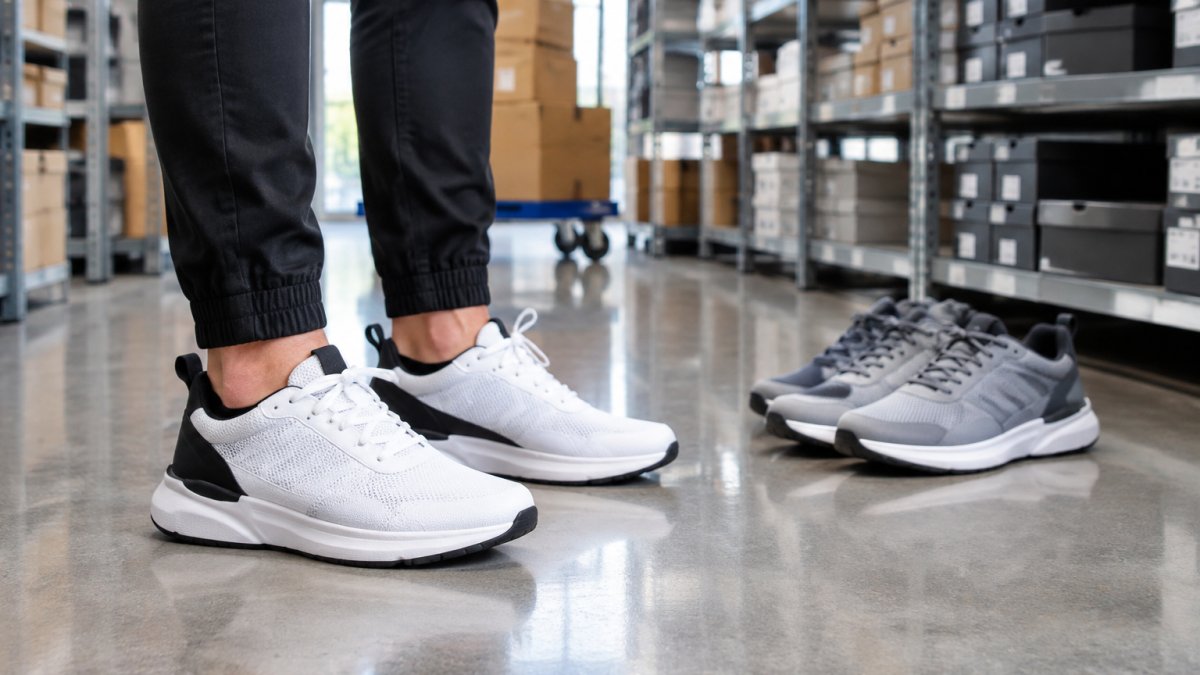
Nike Structure 26: The Arch-Support Pick for Hard Floors
Concrete and tile punish your arches, and the Structure 26 is built for exactly that. The shoe lists adjustable arch support among its features.
The shoe lists a lightweight upper, a cushioned midsole and a durable outsole.
Shop the Nike Structure 26 in white, size 9.
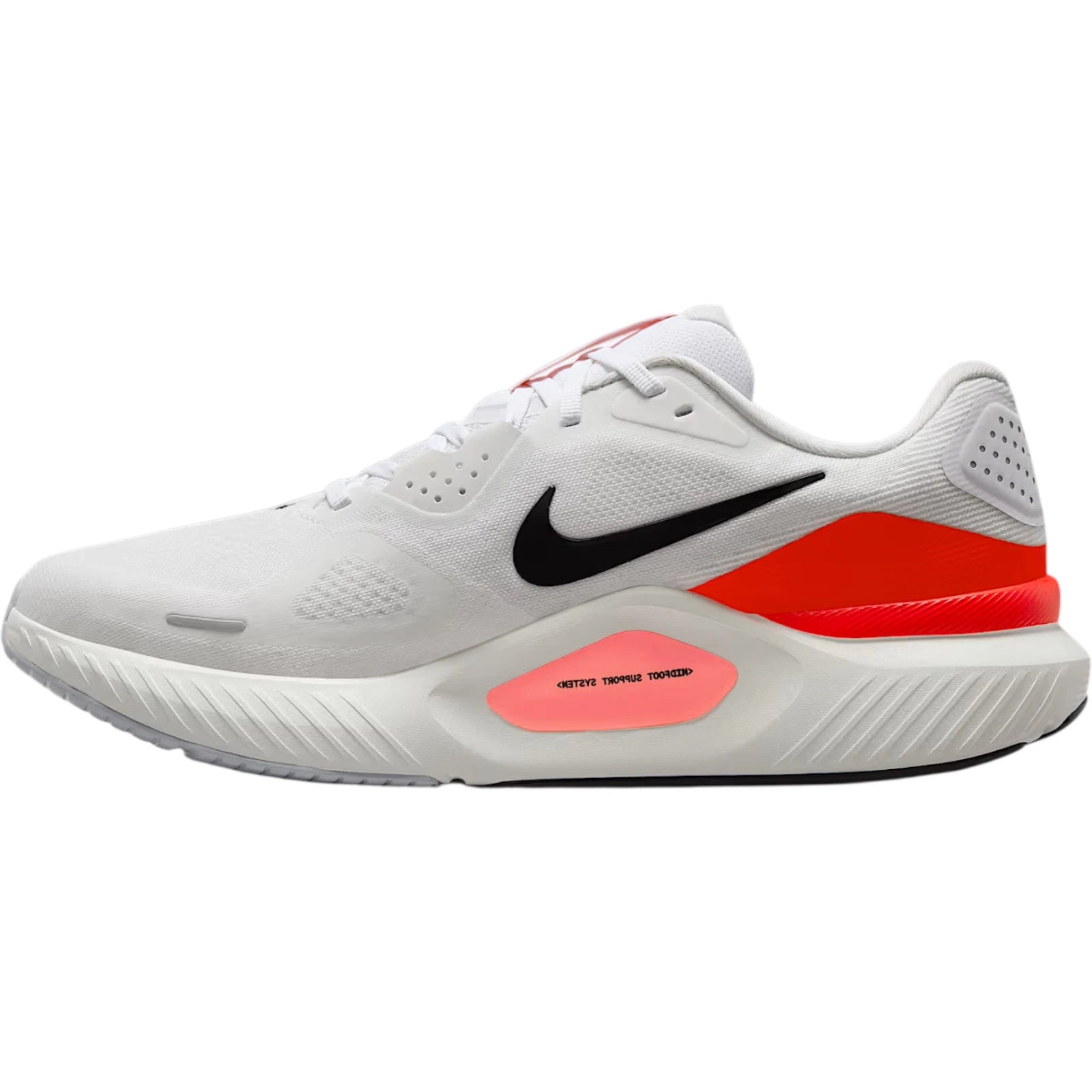
Nike Quest 5: The Lightweight Everyday Sneaker Under $80
Budget does not have to mean painful. The Quest 5 pairs a breathable mesh upper with a foam insole and a rubber outsole that grips pavement, and the padded collar cushions your ankle where a stiff shoe usually rubs.
The listing describes a midfoot fitband that works with the laces to keep the foot more secure.
Check sizes on the Nike Quest 5 in black-olive.
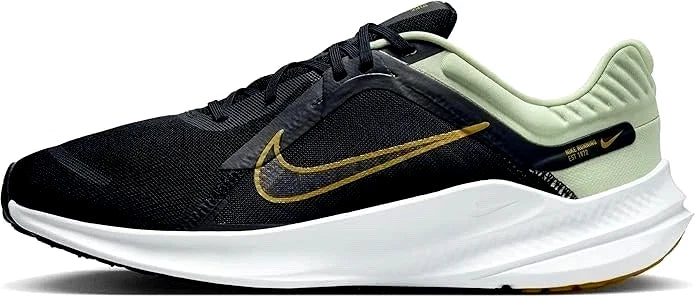
Puma Neutron: The Step-In Cushioning Option for Long Shifts
The Neutron's headline feature is its SOFTFOAM+ sockliner, designed with an extra-thick heel for step-in comfort the moment you slide your foot in.
The listing describes a rubber outsole and a regular fit.
View the Puma Neutron in white, size 10.5.
Podiatrist Recommended Shoes for Standing All Day: What to Look For
Podiatrist recommended shoes for standing all day tend to share the same traits: firm heel counters, cushioned midsoles, removable insoles, and enough toe-box room for your foot to spread.
Use this checklist before you buy:
- Heel cushioning you can feel when you press your thumb into the insole. Press hard and release. The foam should rebound rather than stay dented. A heel that bottoms out under thumb pressure will bottom out under your body weight by hour four.
- A firm heel counter that does not collapse when squeezed. Pinch the back of the shoe. If it folds easily, your ankle will roll inward on uneven surfaces and your heel will slide, which is the most common cause of blisters during long standing shifts.
- Arch support that contacts the middle of your foot without digging in. Slide your hand inside and run a finger along the insole. You want a gentle rise under the arch, not a hard ridge. A ridge that presses into the arch becomes a pressure point after two hours.
How Foot Shape Changes the Recommendation
Two people with the same shoe size can need different shoes because foot shape drives where pressure lands during standing.
Wide forefoot or high volume. A wide toe box and a roomier midfoot matter more than extra cushioning.
Flat feet or feet that roll inward. A firmer midsole and a supportive upper matter more than plush foam.
Bunions or a tender big-toe joint. Toe-box width is the priority.
What the Guidance Actually Says
The American Podiatric Medical Association's footwear guidance recommends shoes with a stiff shank and good arch support for prolonged standing.
Watch out: a shoe marketed as "orthotic-friendly" is not the same as a shoe with real arch support. Check that the insole is removable and that the midsole underneath is firm enough to support an orthotic rather than letting it sink.
Fashionable Shoes for Standing All Day That Still Look Sharp
Comfort and style are not enemies. A clean white sneaker with a low profile reads as smart-casual, and the Puma Neutron in white does exactly that while carrying SOFTFOAM+ cushioning underfoot. The Nike Structure 26 in white and black works the same way with scrubs, chinos, or dark denim.
Here is how we would style them:
- White sneakers with dark jeans and a plain tee for an easy weekend look
- A low-profile runner with tailored trousers where the dress code allows
- Monochrome sneakers to keep the outfit clean and let the fit do the talking
If you want outfit ideas before you commit, our guide on styling designer sneakers with jeans covers pairings that keep comfort shoes looking intentional.
Best Comfortable Sneakers for All Day Standing Women's Sizing and Fit
Measure your foot at the end of the day, when it is largest, and match that length to the brand's size chart rather than your usual number.
Fit matters more than the label. If you have a wide forefoot, size up half a size and use the laces to lock the midfoot. If your heel slips, a heel-lock lacing pattern fixes it without changing the shoe.
Break-In, Rotation, and Care Plan for All-Day Wear
New shoes need a ramp-up, even comfortable ones. The foam and upper have to mold to your foot, and your foot has to adapt to a new pressure pattern. Skipping the ramp-up is how people end up with blisters on day one and blame the shoe.
A Practical Break-In Schedule
Use this progression before you depend on a new pair for a full shift:
- Day 1: two hours at home on carpet. Check for pressure on the pinky toe, the top of the foot, and the heel.
- Day 2: a half shift, or four hours, on the surface you actually work on. If you stand on concrete, break them in on concrete, not carpet.
- Day 3: a full shift, but bring your old pair as a backup in case a hot spot develops.
If a hot spot shows up, address it before it becomes a blister. A heel-lock lacing pattern fixes heel slip; a thinner sock fixes top-of-foot pressure; a half-size up fixes toe pressure. Do not push through a hot spot during a standing shift, because friction only worsens as your feet swell.
Rotation: The Part Most People Skip
A simple rotation:
- Pair A on Monday, Wednesday, Friday, and Sunday.
- Pair B on Tuesday, Thursday, and Saturday.
- Keep a third pair for weekends or outdoor wear if your work shoes get wet or dirty.
When to Replace, and What It Costs Over Time
Press your thumb into the heel: if it no longer rebounds, the cushioning is gone even if the tread looks new.
Care That Actually Extends Life
- Air them out after each shift instead of leaving them in a bag. Moisture breaks down foam and upper materials.
- Wipe mesh uppers with a damp cloth and mild soap. Do not scrub hard, because it fuzzes the mesh.
- Let wet shoes dry at room temperature, never on a radiator or in direct sun. Heat warps the midsole and shrinks the upper.
Shop Authentic Comfortable Sneakers at LFC Designs One
Every pair we sell arrives brand new with its original box and tags. Our guide on telling authentic sneakers from replicas walks through the checks we use, from stitching to box labels.
Free shipping covers all USA orders.
Standing all day is hard enough without shoes working against you. Pick the pair that matches your surface and shift length, break them in slowly, and rotate them.
Frequently Asked Questions
What are the most comfortable sneakers for standing on your feet all day?
Look for plush cushioning in the midsole, a foam insole, and firm arch and heel support. The Nike Structure 26 at $129.99 pairs Soft Foam+ cushioning with adjustable arch support. The Puma Neutron at $81.99 uses a SoftFoam+ sockliner with an extra-thick heel for step-in comfort. Neither shoe fixes foot pain on its own, so try a pair on late in the day when your feet are at their largest and walk around before you commit.
What shoes do doctors recommend for standing all day?
The Nike Quest 5 at $78.99 has a breathable mesh upper, a foam insole, and a midfoot fitband that tightens with the laces for a more secure fit. If you have a diagnosed foot condition, get a recommendation from your own clinician rather than relying on a general list.
Are walking shoes or running shoes better for standing all day?
For standing-heavy work, prioritize cushioning and stability over weight savings. The Nike ZoomFly4 at $78.99 uses Nike React Foam for energy return, though its carbon fiber plate is built for running strides rather than stationary standing.
How should all-day standing sneakers fit?
Leave roughly a thumb's width between your longest toe and the front of the shoe, and check that your heel stays locked in when you walk. Try shoes on in the afternoon or after a shift, since feet swell during the day. The Nike Quest 5 comes in a medium width with a padded footbed, and the Puma Neutron runs a regular fit, so compare both against your usual size. If a pair pinches at the widest part of your foot, size up rather than waiting for it to stretch.
Do comfortable sneakers for standing all day have to look plain?
No. The Nike Structure 26 in white, black, and bright crimson and the Puma Neutron in white with fierce red details both pair with jeans, chinos, or casual workwear. Pick a neutral base color if you need one pair to cover both the job and weekends, then rotate a second pair so each one has time to dry out between shifts.
