
Authentic vs Replica Sneakers: Key Differences
Last Updated: October 23, 2026
Quick Summary
The authentic vs replica sneakers difference comes down to authorization: authentic sneakers are made by the brand or a licensed factory with real quality control, while replica sneakers are unauthorized copies that skip testing, materials standards, and warranty. That means no brand-backed returns and effectively no resale value.
- A licensed reproduction is made under written trademark license and is not a counterfeit.
- Replica makers reverse-engineer from photos, so materials may look right but feel wrong.
- Replicas often use a generic last, so sizing can run narrow, short, or loose.
- Match the SKU on the shoe label to the box label, model, and colorway.
- Pay with a method offering buyer protection and keep photos of the label and box.
Table of Contents
- Authentic vs Replica Sneakers: The Core Difference
- Materials, Construction, and Quality Control
- Fit, Sizing, and Comfort: What Changes
- How to Tell If Sneakers Are Authentic
- Your Sneaker Authentication Checklist
- Fake Sneaker Warning Signs to Watch For
- Are Replica Shoes Worth It? Price, Resale, and Value
- Frequently Asked Questions
Authentic vs Replica Sneakers: The Core Difference
The authentic vs replica sneakers difference comes down to one thing: authorization.
That distinction matters more than most buyers realize. At LFC DESIGNS ONE, we source brand-new designer footwear with original tags and boxes, and we field the same question constantly: how do you actually know?
Here is the part most guides get wrong. A replica is not the same thing as a licensed reproduction. A licensed product is made under legal agreement with the trademark owner. A counterfeit is not.
Materials, Construction, and Quality Control
Materials are where the gap becomes visible, and it is also where the terminology gets sloppy. Three categories get mixed together in most discussions, and separating them is the first step to judging a pair accurately:
- Authentic (first-party): made by the brand or a factory it contracts, sold through authorized channels, covered by the brand's warranty and return policy.
- Licensed reproduction: made under a written trademark license from the brand owner. The license defines materials, labeling, and distribution. This is legal and is not a counterfeit.
- Counterfeit: made without authorization and sold as if it were the branded product. This is the category that carries trademark exposure and no recourse for the buyer.
A genuine pair uses the specific leathers, knits, foams, and adhesives the brand specifies, because those materials were tested against the design. Replica makers reverse-engineer from photos, so the upper may look right in a listing and feel wrong in hand. The practical test is not "does it look real" but "does the material behave like the spec":
- Leather and synthetics: genuine leather has a grain that varies across panels and creases naturally at the toe box; coated split leather and PU often show a uniform plastic sheen and crease in sharp lines.
- Knit uppers: engineered knits have zone-specific density (tighter at the midfoot, open at the toe); replicas frequently use a single uniform knit.
- Foam midsoles: brand foams are specified by density and rebound. A replica midsole often feels firmer out of the box and compresses faster within weeks.
- Adhesives and bonding: factory bonding is applied under controlled heat and pressure; excess glue at the midsole seam or a sole that lifts at the toe is a construction tell, not a cosmetic one.
Construction tells the rest of the story. Look at stitching density and consistency (count stitches per inch on a straight seam and compare left to right), how the sole is bonded to the upper, and whether glue sits where it should not. Genuine pairs run through a brand's quality control process, which is why pair-to-pair variation stays small. Replicas vary wildly from one unit to the next, so two pairs of the same replica model can differ in fit and finish.
- Stitching: even spacing, no loose threads, consistent tension, clean backside
- Sole bonding: clean seal, no visible excess glue at the midsole, no lifting at the toe
- Materials: correct grain, weight, and finish for the model
- Finish: no paint overspray, no uneven edges on overlays, consistent color across panels
On safety and testing, the honest position is that most replica listings publish no material testing data, no chemical safety documentation, and no factory identification. Authentic brands typically publish material specs and comply with applicable consumer product safety rules, and authorized retailers can produce a certificate of authenticity or order record. If a seller cannot tell you who made the pair and under what authorization, treat the material claims as unverified.
Fit, Sizing, and Comfort: What Changes
Fit is the difference buyers feel first. Replica makers often work from a generic last, so a size 10 replica can run narrow, short, or loose compared with the retail pair it copies.

Comfort follows the same logic. Cushioning, insole foam, and midsole geometry in an authentic pair are engineered together.
Sizing across brands already varies, and replicas make it worse. If you normally wear a 10 in one brand and a 9.5 in another, a replica adds a third unknown.
How to Tell If Sneakers Are Authentic
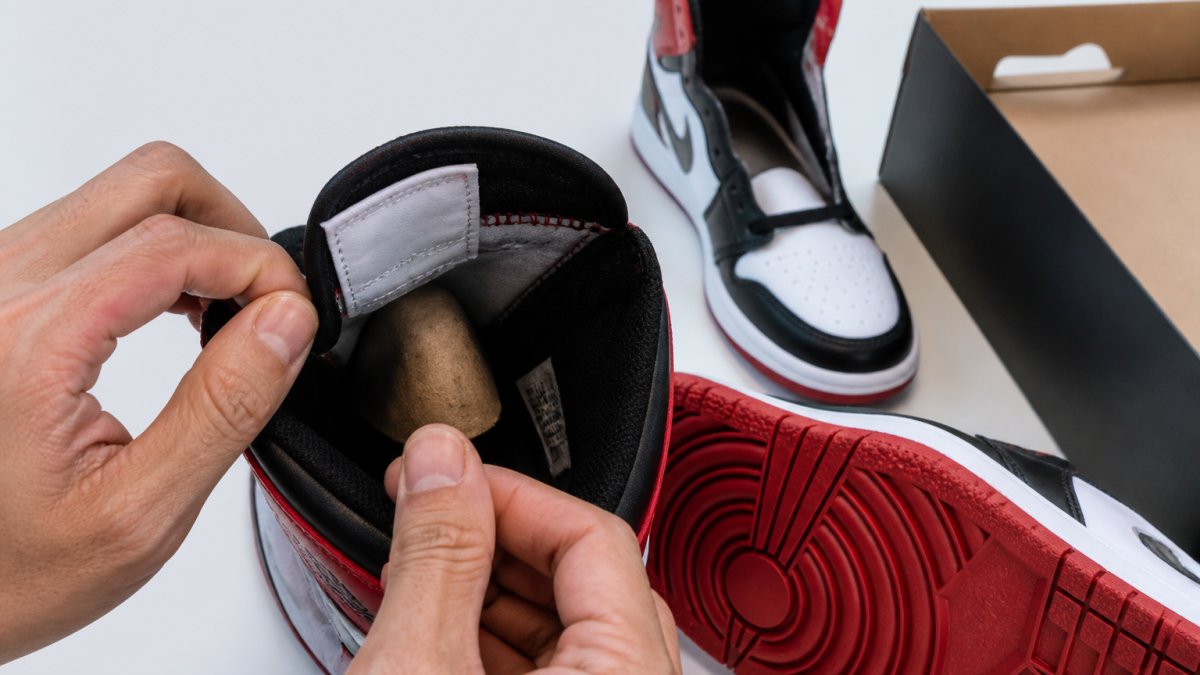
Knowing how to tell if sneakers are authentic starts with the label, not the logo. The size label inside the shoe is one of the hardest details to copy well: font weight, spacing, country of origin, and the SKU should all match the model and the box.
Then work outward. Check the packaging, the box label, and any included paperwork against the shoe. Compare the colorway and logo placement to official product photos. Look at the shape from the side and the heel, since replicas often get proportions slightly wrong.
- Match the SKU on the shoe label to the box label
- Confirm the size label font and spacing look clean and consistent
- Compare logo placement and scale to official images
- Check the shape, heel height, and toe box profile
- Review the seller's reputation and return policy before buying
Your Sneaker Authentication Checklist
A sneaker authentication checklist turns a gut feeling into a repeatable process.
Step 3, Materials by model type.
Nike Men's Sneakers US Size 10 ZoomFly4 Wolf Grey Photo Blue White NEW IN BOX →
- Leather and suede models: check grain variation across panels and crease behavior at the toe box. Coated split leather shows a uniform sheen and sharp creases.
- Knit and mesh runners: check zone-specific density, tighter at the midfoot, more open at the toe. A single uniform knit is a common replica shortcut.
- Foam and plate runners: press the midsole and check rebound. A firmer, dead-feeling foam out of the box is a signal, and a carbon plate should feel stiff along its length, not flexible like plastic.
Step 4, Sole, glue, and tread. Check bonding at the midsole seam, excess adhesive, and tread pattern depth.
Step 5, Shape and proportions. Look at the side profile, heel height, and toe box.
Step 6, Packaging and paperwork. Original box, tags, and a receipt or order record.
Step 7, Seller evidence. Ask for images of the actual pair, not stock photos, plus the order record or receipt.
- Label and SKU: shoe label matches box label, model, and colorway
- Stitching: even spacing, no loose threads, clean finish inside and out
- Materials: correct grain and weight for the model type, no plastic sheen on leather panels
- Sole and glue: clean bonding, no excess adhesive, correct tread pattern
- Shape: side profile, heel height, and toe box match official images
- Packaging and proof of purchase: original box, tags, and a receipt or order record
- Seller evidence: real images of the actual pair and a clear sourcing answer
- Payment protection: a method with buyer protection and a documented return path
Fake Sneaker Warning Signs to Watch For
Fake sneaker warning signs cluster around price, paperwork, and pressure. A price far below retail on a current, in-demand model is the loudest signal. So is a seller who cannot explain where the pair came from or provide proof of purchase.
Watch for missing or mismatched tags, a box that does not match the shoe, and stock photos used in place of real images of the actual pair.
- Price far below retail on a sought-after model
- No return policy, or a policy buried and vague
- Stock photos instead of images of the actual pair
- Tags missing, mismatched, or clearly reprinted
- Seller avoids questions about sourcing
Are Replica Shoes Worth It? Price, Resale, and Value
Are replica shoes worth it? For most buyers, no, once you count what you lose. A replica costs less upfront, but it carries no warranty, no return path through the brand, and effectively no resale value. A genuine pair holds recoverable value and can be resold, which changes the real math.
| Factor | Authentic | Replica |
|---|---|---|
| Upfront price | Higher | Lower |
| Warranty and returns | Brand-backed | Usually none |
| Resale value | Recoverable | Near zero |
| Materials and testing | Brand standard | Unverified |
| Fit consistency | Predictable | Variable |
Total cost of ownership favors authentic when you factor in replacement. A replica that wears out in a season and cannot be resold often costs more per month of wear than a genuine pair bought once.
For example, our Nike Men's Sneakers US Size 10 ZoomFly4 in Wolf Grey Photo Blue White at $78.99 ships new in the original Nike box, with the Flyknit upper, React Foam midsole, and internal carbon fiber plate described on the listing. The Quest 5 in Black-Olive at $78.99 gives you the same new-in-box standard in an everyday walking silhouette, with a mesh upper and foam insole.

Frequently Asked Questions
Is it worth buying replica shoes?
It depends on what you value. Replica sneakers cost less up front, but they typically use cheaper materials, show wear faster, and hold almost no resale value. Authentic pairs keep recoverable value, come with a warranty and return policy, and fit the way the brand designed them. If you want a shoe that lasts and can be resold, authentic wins. If you only need a short-term look, a replica may save money, but you give up durability and buyer protection.
How can you tell if sneakers are authentic or replica?
Start with the details a counterfeit usually gets wrong: stitching should be even and tight, the size label and SKU should match the box, and logo placement should be symmetrical. Check the shape and colorway against official product photos, inspect the glue lines and finish, and confirm the seller's reputation and proof of purchase. A legit check from a trained authenticator adds certainty. Our sneaker authentication checklist walks through each step in order.
Is it illegal to buy replica shoes?
Buying counterfeit goods is not generally a crime for the individual buyer, but selling them as authentic is. Counterfeit products infringe trademarks, and reselling replicas while claiming they are genuine can expose you to civil liability and, in some cases, criminal penalties. Legitimate licensed replicas are a separate category from counterfeits. If you plan to resell, only sell authentic sneakers with clear proof of purchase.
Do replica sneakers have the same quality as authentic sneakers?
No. Authentic pairs go through the brand's manufacturing standards and quality control, so pair-to-pair variation is limited. Replicas often use lower-grade materials, weaker glue, and less consistent stitching, which shows up in fit, comfort, and durability. The upper may crease faster, the sole may separate sooner, and the insole may flatten quickly. For daily wear or performance use, that gap matters.
What should you check before buying sneakers from a resale seller?
Ask for clear photos of the size label, SKU, stitching, sole, and box label. Confirm the seller's reputation and return policy, and pay with a method that offers buyer protection. Compare the pair against official product details and check for fake sneaker warning signs like mismatched labels or sloppy glue. If the price is far below retail for a new, in-demand pair, treat that as a red flag and verify before you pay.
The real challenge is not spotting a fake. It is finding a source you can trust without paying full retail for the privilege. At LFC DESIGNS ONE, every sneaker we list is brand new with original tags and its original box, backed by free shipping across the USA and a catalog of authentic designer picks. Shop now and step into a pair you never have to second-guess.
