
How to Maintain Designer Clothing for Longevity
Table of Contents
- Why Designer Clothing Requires Different Care
- How to Wash Designer Clothes Without Damage
- How to Remove Stains from Designer Clothes Correctly
- How to Store Luxury Clothing to Prevent Damage
- Clothing Repair and Maintenance to Extend Garment Life
- Drying and Post-Wash Care for Designer Pieces
- Care Instructions by Designer Fabric and Construction
- Frequently Asked Questions
Last Updated: October 13, 2026
Why Designer Clothing Requires Different Care
Designer pieces demand a different approach than everyday wear. Premium construction, rare fabrics, and meticulous craftsmanship only pay off if you maintain designer clothing properly.
Proper care can extend the life of luxury pieces by years, a well-cared-for garment can outlast multiple seasons of regular wear.
The cost of neglect shows up quickly: one careless wash can shrink a $200 shirt, heat fades colors permanently, and improper storage causes creasing that won't come out.
How to Wash Designer Clothes Without Damage
Maintaining designer clothing starts with how you wash. Most people use one approach for everything in their closet, designer pieces need something different.
Choosing the Right Water Temperature and Cycle
Cold water is non-negotiable. Heat breaks down fibers, sets stains, and fades colors; cold water preserves fabric integrity and still cleans effectively.
Use a delicate or gentle cycle, less agitation and shorter spin times protect seams and prevent fiber stress.
Here's what matters most:
- Water temperature: Always cold (under 65°F)
- Cycle: Delicate or gentle only
- Spin speed: Low when possible
- Load size: Wash fewer items per load
Many worry cold water won't clean well, but it does with the right detergent. The reduced agitation of a delicate cycle matters more, less movement means less wear on fibers.
Selecting Gentle Detergents for Fabric Protection
Standard detergents contain harsh chemicals and enzymes that break down stains aggressively, and damage delicate fibers.
Look for detergents labeled "gentle," "delicate," or "wool-safe", milder surfactants clean without stripping fibers. Avoid bleach, optical brighteners, and heavy enzymes.
Liquid detergents beat powders for designer pieces: powders leave residue on dark fabrics, while liquids dissolve and rinse cleanly. Use less than you think, oversudding traps dirt against fibers.
A few detergent options worth considering:
- Wool-specific formulas (work on most delicate fabrics)
- Baby detergents (mild and effective)
- Silk-safe detergents (designed for protein fibers)
- Fragrance-free options (less likely to cause discoloration)
Hand-Washing Delicate and High-Value Pieces
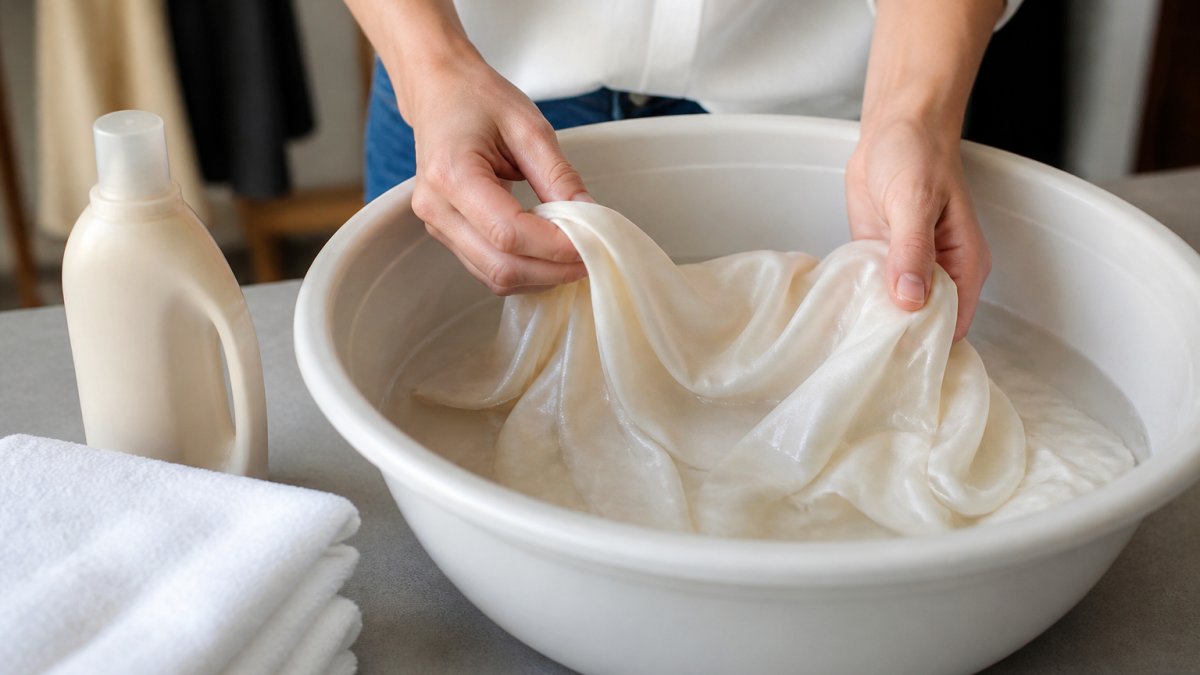
Some garments shouldn't go in a machine at all. Silk, intricate beading, delicate embroidery, and anything with special construction should be hand-washed.
Fill a basin with cold water and a small amount of gentle detergent.
Rinse in clean cold water 2-3 times until it runs clear, then gently squeeze out excess water, never wring or twist.
Hand-washing steps:
- Fill basin with cold water
- Add gentle detergent (about 1 teaspoon)
- Submerge garment and gently agitate
- Soak for 5-10 minutes if heavily soiled
- Rinse in clean water 2-3 times
- Gently squeeze out excess water
It takes more time, but it's the only way to safely maintain designer clothing that's truly delicate.
How to Remove Stains from Designer Clothes Correctly
Stains are inevitable. How you handle them determines whether they disappear or become permanent.
Spot-Cleaning Between Washes
The best stain removal happens immediately, the longer a stain sits, the more it sets. Blot fresh stains with a clean white cloth; don't rub.
Identify the stain type first.
For most fresh stains, blot with cold water and a clean cloth, letting it absorb the stain.
Common stain treatments:
- Wine or juice: Blot immediately, rinse with cold water
- Grease: Blot with dry cloth, use minimal detergent solution
- Chocolate: Let dry completely, then gently brush away
- Coffee: Blot with cold water, avoid heat
- Ink: Blot gently, avoid rubbing
Never apply heat to a fresh stain. Heat sets most stains permanently. Never put a stained garment in the dryer.
When to Stop DIY Cleaning and Seek Professional Help
Some stains are beyond home treatment. Professional dry cleaners have specialized solvents and expertise DIY methods can't match.
Stop trying to remove a stain yourself if:
- The stain has been there more than a few days
- Home treatments haven't worked after one attempt
- The stain is on a delicate or expensive piece
- You're uncertain what caused the stain
- The garment has special finishes or embellishments
Professional cleaners handle stains that would damage the garment if you kept trying, understanding how fabrics react to different solvents.
When you take a piece to a professional cleaner, tell them exactly what the stain is and what you've already tried. Give them time, rushing a delicate cleaning can cause damage.
How to Store Luxury Clothing to Prevent Damage
How you store designer pieces between wears matters as much as how you wash them. Poor storage creates wrinkles, discoloration, and permanent damage.
Proper Folding and Hanging Techniques
Not everything should be hung. Heavy knits and stretchy pieces lose their shape on hangers, while jackets and coats need them.
Use quality padded hangers, wire and thin plastic hangers create indentations, while padded hangers distribute weight evenly and prevent shoulder marks.
Storage hierarchy:
- Hang: Jackets, blazers, coats, structured shirts
- Fold: Sweaters, knits, delicate blouses, t-shirts
- Fold with tissue: Silk pieces, vintage items, special garments
Never use wire hangers, hang knits or stretchy pieces, or fold delicate fabrics without tissue, these mistakes cause permanent damage.
Climate Control and Seasonal Storage
Temperature and humidity matter more than most people realize: fluctuating conditions weaken fibers, and moisture encourages mold and mildew.
Store designer pieces in a cool, dry, dark space. Ideal conditions are 60-70°F with 30-50% humidity.
Armani Exchange T-shirt Color Blue M (ORIGINAL WITH TAGS) →
Keep pieces away from direct sunlight. UV light fades colors permanently. Even indirect sunlight over months causes noticeable fading.
For seasonal storage, use breathable garment bags, not plastic. Plastic traps moisture. Breathable bags allow air circulation while protecting from dust.
Storage checklist:
- Temperature: 60-70°F
- Humidity: 30-50%
- Darkness: Away from windows and direct light
- Ventilation: Use breathable bags, not plastic
- Protection: Cedar or lavender for moth prevention
Clothing Repair and Maintenance to Extend Garment Life
Small problems become big ones if you ignore them. Addressing issues early keeps designer clothing in excellent condition.
Addressing Small Repairs Before They Become Major Issues
A loose button is a five-minute fix. A missing button for months becomes a wardrobe casualty. A small seam separation gets worse with every wear.
Check your designer pieces regularly. Look for loose threads, small holes, or separating seams. Address these immediately. A quick stitch prevents a garment from becoming unwearable.
Keep a basic sewing kit for simple repairs; for anything beyond your skill level, take it to a tailor, repair always costs less than replacing a designer piece.
Common repairs worth doing immediately:
- Loose buttons (sew back on)
- Loose seams (quick hand stitch)
- Loose hems (re-stitch or use hem tape)
- Small holes (patch or darn)
- Loose threads (tie off or trim)
Professional Alterations and Tailoring
A perfect fit extends a garment's life. Pieces that fit well get worn more. Pieces that fit poorly sit in the closet.
Professional tailors can adjust fit, repair seams, and restore garments to like-new condition, understanding how to work with different fabrics and construction methods.
Common tailoring services:
- Hemming pants, skirts, and dresses
- Taking in or letting out seams
- Replacing zippers
- Adjusting sleeve length
- Repairing or replacing collars
Invest in tailoring for pieces you love. A $50 alteration that makes a $300 piece fit perfectly is money well spent.
Drying and Post-Wash Care for Designer Pieces
How you dry designer clothing determines how long they last. Heat is the enemy of fabric longevity.
Air-Drying to Prevent Heat Damage
Never put designer pieces in a dryer: machine heat damages fibers, fades colors, and causes shrinkage. Air-drying takes longer but preserves the garment.
Hang delicate pieces on padded hangers in a well-ventilated space, lay flat pieces on a clean, dry surface, turn pieces inside-out to reduce fading, and avoid direct sunlight.
Most designer pieces dry within 24 hours; some delicate fabrics take longer.
Drying best practices:
- Never use a dryer
- Hang on padded hangers
- Lay flat for delicate pieces
- Turn inside-out when possible
- Avoid direct sunlight
- Ensure good air circulation
Washing Frequency and Rotation Strategies
You don't need to wash designer pieces after every wear. Frequent washing is one of the biggest threats to longevity.
Wear pieces multiple times before washing, most garments go 2-3 wears without obvious dirt or stains. Spot-clean instead of full washing to dramatically reduce fiber wear.
Rotate your wardrobe: wearing the same pieces repeatedly stresses them, while spreading wear across 5-7 similar items means each piece lasts longer.
Washing frequency guidelines:
- T-shirts and casual pieces: Every 2-3 wears
- Blouses and dress shirts: Every 2-4 wears
- Pants and jeans: Every 5-7 wears
- Jackets and outerwear: Every 10-15 wears
- Delicate pieces: As infrequently as possible
Care Instructions by Designer Fabric and Construction
Different fabrics need different approaches. Understanding your garment's material determines the best care method.
Wool, Silk, and Delicate Fabrics
Wool is durable but requires specific care. Its fibers have scales that lock together and felt when exposed to heat and moisture, so always use cool water, gentle agitation, and wool-specific detergent.
Silk is delicate: hand-washing is almost always better than machine washing, and since silk loses strength when wet, avoid wringing.
Cashmere and other luxury knits need special care: hand-wash in cool water with gentle detergent, lay flat to dry (hanging stretches fibers), and store folded.
Fabric care summary:
- Wool: Cool water, wool detergent, gentle cycle
- Silk: Hand-wash, distilled water rinse, lay flat dry
- Cashmere: Hand-wash, lay flat, fold for storage
- Linen: Cool water, gentle cycle, air dry
- Delicate blends: Follow the most delicate fiber in the blend
Denim and Cotton Blends
Denim is more forgiving than delicate fabrics but still benefits from proper care. Wash inside-out in cold water on a gentle cycle, and dry flat or hung, never in the dryer.
Quality denim from designer brands benefits from proper care. Better seams and higher-quality fabric can maintain their appearance longer with proper maintenance.
Maintaining designer clothing for longevity isn't complicated, it's about consistency.
When you shop for designer pieces at LFC DESIGNS ONE, you're investing in quality that rewards careful maintenance. Our selection of authentic designer apparel, from Armani Exchange to Karl Lagerfeld, comes brand new with original tags.

The American Textile Manufacturers Institute guidelines on fabric care provides additional standards for understanding care labels. The Smithsonian's conservation guidelines for clothing storage offers expert recommendations for long-term garment preservation. For specific fabric questions, The Textile Exchange resources on fiber care provides detailed information on different material types.
Frequently Asked Questions
How often should you wash designer clothing?
Most designer pieces benefit from washing less frequently. Spot-clean visible stains and air out garments between wears. Wash items like t-shirts and polo shirts every 3-5 wears, while outerwear and structured pieces may need washing only once or twice per season. Check the care label on your specific garment, designer brands often recommend reduced washing to maintain fabric longevity and color retention.
What's the best way to remove stains from designer clothes?
Act quickly by blotting (not rubbing) the stain with a clean cloth. For most stains, test a gentle detergent solution on an inconspicuous area first. Apply the solution sparingly, work from the outside of the stain inward, and rinse thoroughly with cold water. For stubborn stains on expensive pieces, especially silk, wool, or delicate fabrics, professional dry cleaning is worth the investment to avoid permanent damage.
Can you machine-wash designer clothes?
Many designer pieces can be machine-washed if you follow specific precautions. Use a delicate cycle with cold water, place items in a mesh laundry bag, and use gentle detergent designed for fine fabrics. However, hand-washing is safer for delicate, high-value, or heavily embellished pieces. Always check the care label first, some designer garments explicitly require hand-washing or professional cleaning only.
How should you store designer clothes to prevent damage?
Store items in a cool, dry, well-ventilated space away from direct sunlight to prevent color fading. Use padded hangers for delicate pieces and fold heavier items to avoid stretching. Keep garments clean before storage, use acid-free tissue paper for folded items, and store seasonal pieces in breathable garment bags. Maintain consistent temperature and humidity to prevent shrinkage, mold, and fiber deterioration.