
Why Are Designer Clothes Discounted Online? 7 Real Reasons
Table of Contents
- Why Designer Clothes Get Discounted: The Real Economics
- 1. Retail Markup and the Real Cost of Making Clothes
- 2. Overstock, Clearance, and the Seasonal Cycle
- 3. Past-Season Designer Clothing: Last Year's Line, This Year's Deal
- 4. Designer Clothes Outlet Online vs. Mainline: What's the Difference?
- 5. How to Spot Fake Designer Clothes Before You Buy
- 6. Buying Authentic Designer Clothes Online: A Practical Checklist
- Conclusion: Smart Discounts vs. Red Flags
- Frequently Asked Questions
Last Updated: October 7, 2026
Why Designer Clothes Get Discounted: The Real Economics
Designer clothes discounted online usually trace back to seven economic reasons: retail markup, overstock, seasonal cycles, past-season inventory, outlet-versus-mainline differences, supply chain shifts, and authentication-driven resale.
At LFC DESIGNS ONE, customers ask every week: if the tag is real and the item is new, why is the price lower than full retail?
Most shoppers assume a discount means something is wrong. In practice, discounts exist because inventory has to move, seasons end, and brands need cash flow.
This guide explains the mechanics behind designer clothes discounted online, plus how to verify authenticity.
1. Retail Markup and the Real Cost of Making Clothes
Retail markup is the gap between what a garment costs to make and its full retail price, wider than most shoppers expect.
A typical designer t-shirt costs a fraction of its retail price to produce. The rest covers brand positioning, marketing, storefronts, and profit, so a discounted shirt is often still profitable.
Raw Material Costs and Garment Quality
Raw material costs vary widely: cotton, wool, silk, and technical blends all carry different manufacturing costs.
Higher-quality materials cost more to source, but retail price reflects far more than fabric: the label, the design, and decades of brand equity.
That is why a discounted designer piece can still be well made, the markdown affects price, not fabric.
Why the Same Shirt Sells for 5x the Wholesale Price
Wholesale pricing is what a retailer pays the brand; retail pricing is what you pay at the register.
The difference is the retail markup, which covers:
- Store rent or e-commerce hosting
- Staff and customer service
- Marketing and photography
With excess inventory, a brand can cut retail price and still profit above wholesale, the core mechanic behind most designer discounts.
2. Overstock, Clearance, and the Seasonal Cycle
Overstock happens when a brand or retailer orders more than it sells; clearance moves that extra inventory.
Fashion runs on seasonal cycles: spring/summer arrives, then fall/winter. Whatever does not sell gets marked down to make room for the next drop.
Inventory management is a balancing act: too much stock ties up cash, too little means missed sales.
A common mistake is assuming clearance means poor quality. In reality, clearance means timing, not condition.
3. Past-Season Designer Clothing: Last Year's Line, This Year's Deal
Past-season designer clothing is authentic inventory from a previous collection, not defective, not counterfeit, simply last year's line.
For shoppers, this is the sweet spot: the same construction, materials, and often the same design language at a lower price.
The trade-off is selection: popular sizes and colors sell out first, so if you see a past-season piece in your size, waiting rarely helps.
4. Designer Clothes Outlet Online vs. Mainline: What's the Difference?
Designer clothes outlet online often sell past-season or overstock items pulled from the mainline, the full-price collection sold in flagship stores and on the brand's own site. But much of what shows up in outlet channels was never on a mainline floor: it was manufactured specifically for the outlet, which explains most of the price gap.
Why Made-for-Outlet Goods Exist
Brands face a structural problem: full-price customers will not tolerate seeing the item they paid full retail for in an outlet bin a month later, which trains shoppers to wait for markdowns and erodes pricing power.
The workaround is a separate production run: a distinct SKU, same label, similar silhouette, different build, sold only through outlet and off-price channels.
This is not a scam but a deliberate, legal, widespread channel strategy. The problem is when a seller implies a made-for-outlet piece is mainline merchandise simply marked down.
How the Two Actually Differ
| Feature | Mainline | Made-for-Outlet |
|---|---|---|
| Where it first sold | Flagship stores, brand site | Outlet and off-price channels only |
| Fabric spec | Original design spec | Often lighter weight or a blended substitute |
| Hardware | Branded zippers, buttons | May use generic or simplified hardware |
| Construction | Full lining, finished seams | Sometimes simplified or partially lined |
| Tagging | Standard brand tag | May carry a channel-specific tag or code |
| Price logic | Full retail, then marked down | Priced to the outlet channel from day one |
A common pattern: a mainline wool coat with full lining and branded hardware versus a made-for-outlet version in a wool-blend shell with partial lining and unbranded buttons. Both carry the label; only one ever sold at full price.
How to Tell Which One You Are Looking At
You usually cannot tell from the product photo alone. You can tell from the details:
- Search the style number. Every garment has a style or model code on the inner tag. Search that exact code. If it returns only outlet and off-price listings and no mainline product page, it was likely made for the outlet channel.
- Check the fabric composition tag. A mainline piece lists its original fiber content. A made-for-outlet version often shows a higher synthetic percentage than the mainline equivalent.
- Compare hardware. Look for branded zipper pulls and buttons in close-up photos. Generic hardware on a designer label is a signal.
What This Means for Your Wallet
If you want the newest designs and the original construction, buy past-season mainline. You are getting the exact item that once sold at full retail, just later.
If you want a recognizable label at the lowest possible price and you are not attached to the original spec, made-for-outlet is a legitimate value play. Just know what you are buying. The mistake is paying near-mainline prices for a made-for-outlet piece because a listing blurred the distinction.
5. How to Spot Fake Designer Clothes Before You Buy
Spotting fake designer clothes starts with three checks: the tag, the stitching, and the serial number. But those three checks only catch the lazy counterfeits. The sophisticated ones pass a casual photo review. What separates a real authentication pass from a hopeful glance is a repeatable workflow and knowing which specific details counterfeiters consistently get wrong.
The Three-Tier Authentication Workflow
Run every potential purchase through three tiers, in order. If an item fails any tier, stop.
Tier 1, Listing-level red flags (before you look at details)
- Price is far below what the same item sells for elsewhere, with no stated reason
- Seller uses only stock photos and refuses close-ups
- Listing says "authentic" repeatedly but never explains why it is discounted
Tier 2, Physical detail checks (from close-up photos)
- Tags: Authentic brand tags use clean, consistent typography. Look for misspellings, blurry logos, uneven letter spacing, or a font that does not match the brand's known typeface. On many brands, the inner label is stitched on with a specific thread color and stitch pattern that counterfeiters often approximate poorly.
- Stitching: Real designer garments use even, tight stitching with consistent stitch length and no loose threads. Counterfeits show uneven seams, skipped stitches, or a sudden change in stitch density where a panel was attached.
- Hardware: Zippers, buttons, and rivets are expensive to replicate well. Look for branded zipper pulls, correct button engraving, and hardware weight. Generic or unmarked hardware on a designer label is a strong signal.
Tier 3, Verification and recourse
- Search the style number. Enter the exact style or model code from the inner tag into a search engine. A legitimate mainline item usually returns a product page, a press mention, or a retailer listing. If the code returns nothing, be cautious.
- Use a paid authentication service. For high-value items, third-party authentication services review photos of tags, hardware, and stitching and issue an opinion. This is the closest thing to a professional second opinion available to an online buyer.
- Check the return policy before you buy. A seller who offers a clear, no-questions return window is far safer than one who does not. If an item turns out to be counterfeit, a return policy is your only practical remedy.
Brand-Specific Tells Worth Knowing
Counterfeiters tend to fail on the details that are hardest to replicate at scale. Across many designer brands, the recurring weak points are:
- Logo typography: The exact letterforms, spacing, and proportions of a brand's logo are consistent across every authentic item. Counterfeits often stretch, compress, or substitute a similar-looking font.
- Stitch count and pattern: Some brands use a specific number of stitches per inch or a signature stitch pattern on collars, cuffs, or pockets. A deviation is telling.
- Label placement: The position of the inner label, size tag, and care tag relative to seams is standardized. Counterfeits frequently place them slightly off.
What Authentication Cannot Do
No photo-based check is perfect. The best counterfeiters replicate tags, stitching, and hardware closely enough to fool a careful buyer. That is why the strongest protection is not a single check but the combination of a transparent seller, a clear return policy, buyer-protected payment, and a price that makes economic sense. If any one of those is missing, the risk rises sharply regardless of how good the photos look.
6. Buying Authentic Designer Clothes Online: A Practical Checklist
Buying authentic designer clothes online comes down to a repeatable checklist. Run it every time before you check out.
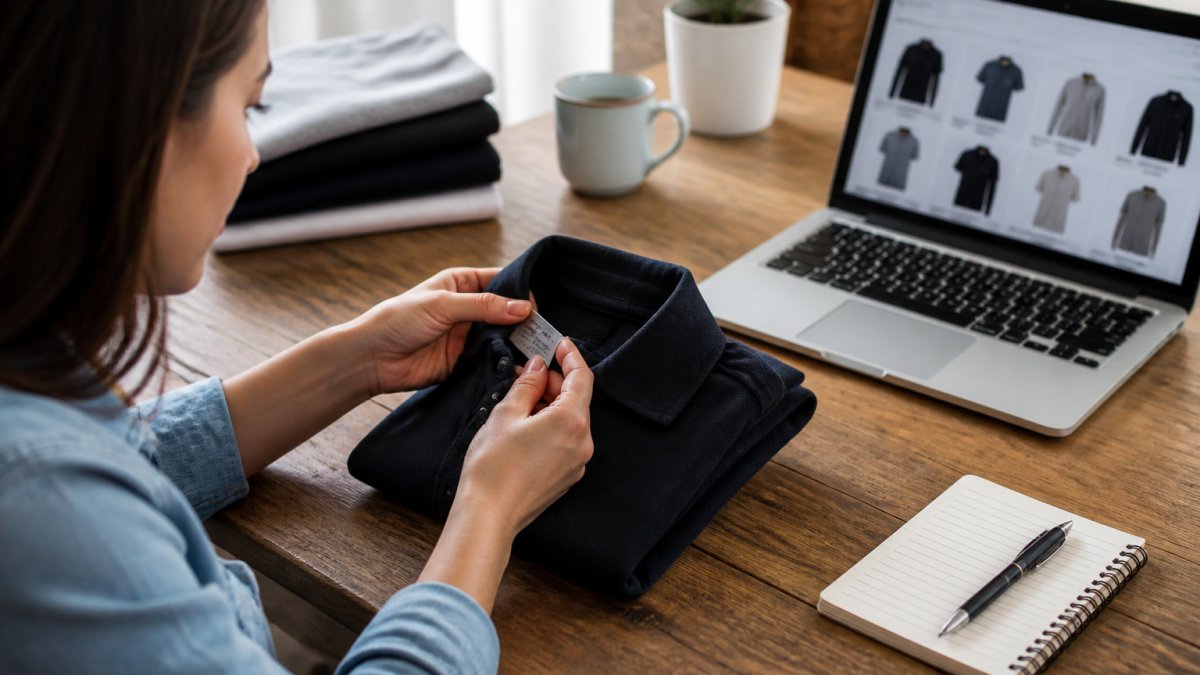
Use this checklist before you buy:
- Seller shows original brand tags in clear photos
- Stitching looks even and tight in close-ups
- Serial number or authenticity code is visible
If a seller passes all eight checks, you are on solid ground. If they fail two or more, move on.
At LFC DESIGNS ONE, every item ships new with original tags. That transparency is what separates a real deal from a risky one.
Conclusion: Smart Discounts vs. Red Flags
A discount on designer clothing is not automatically a warning. Most discounts come from markup math, overstock, or seasonal timing.
LFC DESIGNS ONE offers authentic designer apparel with original tags, free shipping across the country, and a curated selection of t-shirts, polos, caps, and sneakers from globally recognized brands.
Shop Now with LFC DESIGNS ONE and elevate your wardrobe with exclusive designer picks at unbeatable deals.
Frequently Asked Questions
Why are designer clothes cheaper online than in stores?
Online sellers skip the costs of physical retail: mall rent, in-store staff, window displays, and regional distribution. Many also buy overstock, past-season inventory, or wholesale lots directly from brands and authorized distributors. When those costs disappear, designer clothes discounted online can sell for 30-70% below boutique prices without the item being fake or defective. The trade-off is you cannot try items on before buying, so check the return policy first.
Are discounted designer clothes online authentic?
They can be, but authentication matters. Legitimate sellers ship items new with original tags, provide clear photos of brand labels and stitching, and offer returns. Red flags include prices far below any plausible wholesale cost, missing tags, stock photos only, and no return policy. If you are buying authentic designer clothes online, look for a seller who answers authentication questions directly.
How can I spot fake designer clothes before buying?
Check the tag first: authentic tags have clean, evenly spaced stitching, correct brand spelling, and often a style or serial number you can cross-reference. Look at the logo alignment, the weight of the fabric, and the zipper hardware. On sneakers, inspect the sole pattern and inner size tag. If a listing shows only one blurry photo or refuses close-ups of tags, walk away. Learning how to spot fake designer clothes takes ten minutes of comparison and saves you a bad purchase.
Can discounted designer clothes be returned if they do not fit?
Return policies vary by seller, so read them before checkout. Reputable online outlets typically offer 14 to 30 day returns on unworn items with tags attached. Keep the original packaging and do not remove tags until you have tried the item on. If a seller has no published return policy or charges restocking fees on every order, that is a sign to buy elsewhere. A clear, written return window is one of the strongest signals of a trustworthy discount channel.