
How to Read Designer Size Charts: 2026 Fit Guide
Table of Contents
- Why Designer Size Charts Are Not One-Size-Fits-All
- How to Measure for Clothing: A Step-by-Step Guide
- How to Read a Shirt Size Chart Without Guessing
- Designer Clothing Size Conversion Chart: US to International
- Men's Dress Shirt Size Chart: Decoding Numbers and Letters
- A Worked Example: Picking Your Designer Size Step by Step
- Common Mistakes and How to Avoid Return Headaches
- Frequently Asked Questions
Last Updated: October 12, 2026
Why Designer Size Charts Are Not One-Size-Fits-All
Learning how to read designer size charts starts with one uncomfortable fact: a medium is not a medium is not a medium.
Ready-to-wear sizing has no single governing standard.
What matters most is treating every designer size chart as its own document. Compare your body measurements to that specific chart, not to the size you wear in another brand. The rest of this guide shows you how.
How to Measure for Clothing: A Step-by-Step Guide
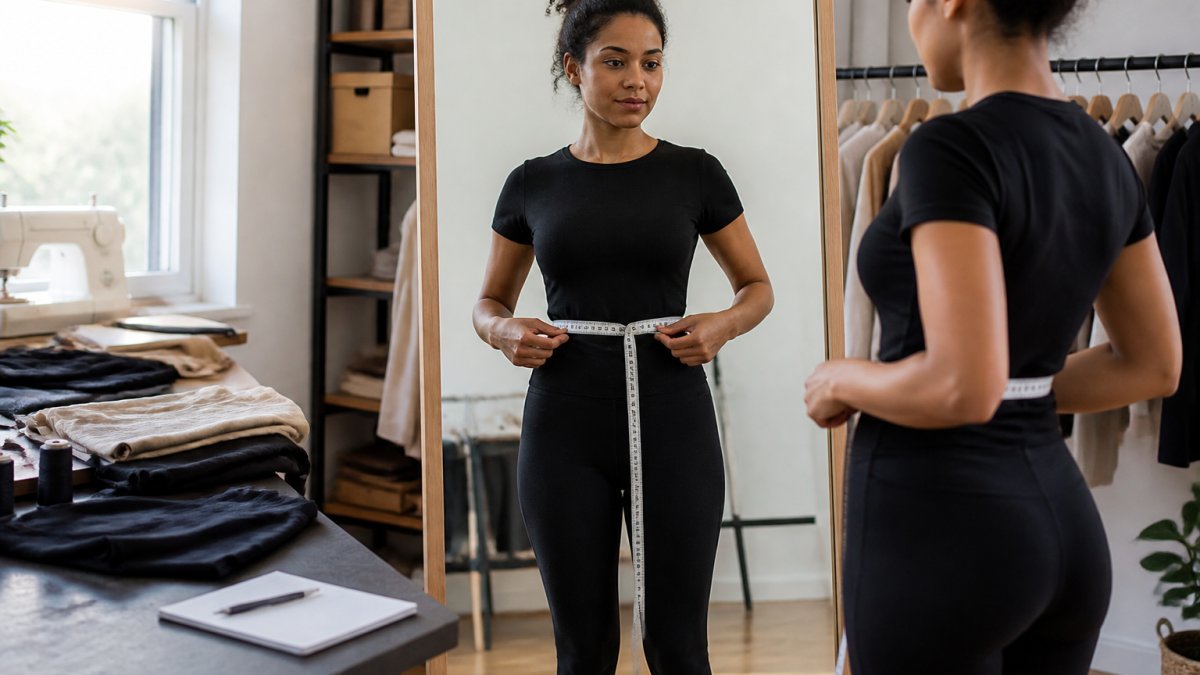
Accurate measurements take about five minutes and a soft measuring tape. Stand straight, wear fitted clothing, and keep the tape snug but not tight.
Tools You Need and How to Stand
You need a flexible measuring tape, a mirror, and a helper if possible. Stand with feet together, shoulders relaxed, and arms at your sides. Keep the tape parallel to the floor, and don't pull it tight or let it sag.
Key Body Measurements: Bust, Chest, Waist, Hips, and Inseam
- Bust or chest: Measure around the fullest part of your chest, keeping the tape level under your arms.
- Waist: Measure around your natural waistline, the narrowest point above your belly button.
- Hips: Measure around the fullest part of your hips and seat.
Write each number down to compare directly against the size chart for the garment you're considering.
How to Read a Shirt Size Chart Without Guessing
A shirt size chart lists either body measurements or garment measurements, and confusing the two is the most common reason a shirt arrives too tight or too loose. Read the header first.
Body Measurements vs. Garment Measurements
Body measurements describe your physical dimensions. Garment measurements describe the finished garment, laid flat and measured across. A 21-inch chest width for a medium shirt means the fabric measures 21 inches across when flat, not that it fits a 21-inch chest. Multiply the flat width by two for the full circumference, then compare against your body measurement plus ease.
Understanding Ease and Intended Fit
Ease is the extra room built into a garment beyond your body measurement. A slim-fit shirt might include two inches of ease; a relaxed or oversized cut might include six or more. If a shirt's finished chest measures 44 inches and your chest measures 40, that's four inches of ease, a comfortable regular fit.
Designer Clothing Size Conversion Chart: US to International
International sizing trips up most online shoppers, because a size number is not a standardized unit. A US medium does not map cleanly onto a European or UK medium, and the same designer can cut a medium differently across categories. Use the table below as a starting reference, then verify against the brand's own chart.
| US Size | UK Size | EU Size | Italy Size | Typical Women's | Typical Men's |
|---|---|---|---|---|---|
| XS | 6 | 34 | 38 | XS | XS |
| S | 8 | 36 | 40 | S | S |
| M | 10 | 38 | 42 | M | M |
| L | 12 | 40 | 44 | L | L |
| XL | 14 | 42 | 46 | XL | XL |
Why the Same Size Number Means Different Things
Ready-to-wear sizing has no single governing standard in the United States. A size label reflects a brand's own pattern block, which changes with the target customer, country of origin, and garment category. A few patterns explain most of the confusion:
- Country of origin sets the base scale. European labels often run numerically smaller than their US equivalents, and UK sizing sits on its own scale. A garment tagged with an Italian size is built to an Italian pattern block, not converted to a US block.
- Category changes the block. A designer's slim-fit shirt and relaxed tee can share a size label but differ by several inches across the chest. Knitwear is often cut closer to the body than woven shirting from the same label.
- Brand tier changes the fit philosophy. Luxury and contemporary labels frequently cut slimmer than mass-market brands at the same nominal size, because the intended fit and target body are different.
How to Verify a Conversion Before You Buy
- Find the brand's own chart on the product page. Ignore third-party conversion tables unless the brand links to them.
- Check whether the chart lists body or garment measurements. This determines how you compare your numbers.
- Read the fit language. Words like "slim," "regular," "relaxed," and "oversized" describe intended ease, which a conversion table never captures.
- Cross-check with the model notes. If the page states the model's height and size worn, that's a real-world reference point.
- When between sizes, size up for tops and outerwear. A slightly loose shirt can be tailored; a tight one usually cannot. For blazers, prioritize shoulder and chest over the waist.
Category-by-Category Notes
- Tops and shirts: Chest and shoulder measurements matter most. Sleeve length is easier to alter than shoulder width.
- Bottoms: Waist and hip drive the fit. Rise and inseam affect comfort and length, and both vary by designer.
- Outerwear: Layering room is built in, so compare the garment's finished chest measurement against your body measurement plus the layer you plan to wear underneath.
If a brand publishes only a conversion table and no measurement chart, treat the purchase as higher risk and confirm the return policy before ordering.
Men's Dress Shirt Size Chart: Decoding Numbers and Letters
Men's dress shirts typically use a neck-and-sleeve format, such as 16/34, where the first number is neck circumference in inches and the second is sleeve length. This system is more precise than S/M/L, which is why dress shirts and many designer button-downs skip letter sizing.
- Neck: Measure around the base of your neck where a collar sits, adding half an inch for comfort.
- Sleeve: Measure from the center back of your neck, across the shoulder, and down to the wrist bone (landsend.com).
- Fit cut: Dress shirts also come in slim, regular, and classic cuts, which change how much room the chest and waist have even at the same neck size.
If you're between two neck sizes, choose the larger one. A collar that's too tight is uncomfortable and hard to alter, while one that's slightly loose can be adjusted by a tailor.
A Worked Example: Picking Your Designer Size Step by Step
A worked example is only useful if it reflects what actually happens when you shop. Most shoppers do not have measurements that all point to one size. Here is a realistic scenario where the numbers disagree.
Scenario: Measurements That Point to Different Sizes
Say your measurements are: chest 40 inches, natural waist 33 inches, and full hip 42 inches. You are considering a designer wrap dress with a fitted bodice and a relaxed skirt. The brand's size chart lists garment measurements, laid flat:
| Size | Chest (flat) | Waist (flat) | Hip (flat) |
|---|---|---|---|
| S | 18 in | 14 in | 20 in |
| M | 19 in | 15 in | 21 in |
| L | 20 in | 16 in | 22 in |
Here is how to work through it.
- Measure yourself first. Chest 40, waist 33, hip 42, confirmed with a soft tape while standing straight in fitted clothing.
- Find the brand's size chart. Locate it on the product page, not a generic conversion table.
- Confirm the chart type. This chart lists garment measurements, so double each flat number for the finished circumference.
-
Calculate ease for each measurement.
- Size M: chest 38 in finished (2 in less than your 40 in body), too tight.
- Size L: chest 40 in finished (0 in ease), still tight for a fitted bodice.
- Size L hip: 44 in finished (2 in ease over your 42 in hip), comfortable for a relaxed skirt.
- Identify the conflict. Your chest points to a larger size than your hip, common when a garment is cut for a different proportion than your body.
- Prioritize the hardest-to-alter area. For a fitted bodice, the chest and shoulder are limiting. Choose the size that fits the chest, then have the waist and hip taken in if needed.
- Check the fabric and construction. A wrap dress with a tie waist can be cinched; a structured sheath dress with no give cannot.
- Confirm against the size label. Here the chest points to a larger size than the hip suggests, so the chest wins.
When Measurements Fall Between Sizes
- Stretch fabrics: A half-size gap is usually forgivable. Choose the smaller size if you prefer a close fit.
- Rigid wovens: Choose the larger size and plan to tailor, since letting out a seam is limited by the seam allowance.
- Structured garments: Prioritize shoulder and chest, which are the most expensive areas to alter.
Reducing Return Risk
- Compare against a garment you already own that fits well. Measure it flat and compare those numbers to the chart, often more reliable than measuring your body.
- Read the return policy before ordering. Confirm the window and condition requirements, since original tags usually need to stay attached.
- Keep tags on until you have tried the item on. Removing tags can void a return.
Every item ships new with original tags, so you can verify authenticity and fit before deciding. If something does not work, keeping the tags intact preserves your options.
Common Mistakes and How to Avoid Return Headaches
The most expensive sizing mistake is treating your usual size as universal. Every brand cuts differently, and the gaps widen across categories like tees, polos, and outerwear.
- Don't guess between sizes. If you're between sizes, check whether the fabric has stretch. Stretch fabrics forgive a half-size gap; rigid wovens do not.
- Read the return policy before ordering. Confirm the window and condition requirements, since original tags usually need to stay attached.
- Keep tags on until you've tried the item on. Removing tags can void a return.
At LFC DESIGNS ONE, every item ships new with original tags, so you can verify authenticity and fit before deciding. If something doesn't work, keeping the tags intact preserves your options.
Frequently Asked Questions
What are the different types of sizes I'll see on designer size charts?
Designer size charts typically use letter sizes (XS, S, M, L, XL), numeric sizes (0, 2, 4 or 28, 30, 32), and measurements in inches or centimeters. Some brands also use country-specific labels like US, UK, EU, or IT. Always check the chart's unit (inches vs. centimeters) and compare your body measurements to the chart's range, not just the letter. For example, a US medium may differ from an Italian medium, so verify each brand's specific chart before ordering.
How do I read a men's dress shirt size chart?
Men's dress shirt sizes usually combine a neck measurement and a sleeve length, like 15.5 / 34. Measure your neck at the base where a collar sits, adding half an inch for comfort. Measure sleeve length from the center back of your neck, over your shoulder, to the wrist bone. Then match those numbers to the brand's chart. Some brands also offer alpha sizes (M, L) with a slim or regular fit, so check the fit description alongside the numbers.
Do designer clothing sizes vary between brands?
Yes, designer sizing can vary significantly by brand, country, and garment category. A medium from one designer might fit like a large from another. European brands often run smaller than US brands. Always use the specific brand's size chart and read customer reviews about fit. If you're between sizes, consider sizing up for a looser fit or down for a tailored look, depending on the garment's intended silhouette.
How do I convert between US and international clothing sizes?
Use a designer clothing size conversion chart that maps US sizes to UK, EU, IT, and FR equivalents. For example, a US women's 6 is often a UK 10, EU 36, and IT 40. For men, a US 40 jacket may be a UK 40, EU 50, and IT 50. Keep in mind these conversions are approximate; always prioritize the brand's own measurements. Measure your body and compare to the chart in the brand's sizing system to avoid errors.
What if I'm between sizes on a designer size chart?
If your measurements fall between two sizes, consider the garment's cut and fabric. For a slim-fit shirt with little stretch, size up for comfort. For a relaxed or oversized style, you might size down. Check the model's height and size in product photos, and read return policies. Many retailers offer free returns, so ordering two sizes and returning one can be a practical way to find your best fit.
How can I avoid return headaches when ordering designer clothing online?
To reduce returns, measure yourself accurately, compare to the brand's specific size chart, and read the fit notes (e.g., 'runs small'). Check the return policy before buying, and note whether returns are free or require a restocking fee. If you're unsure, order from a retailer with a generous return window. Keep the original tags attached until you're certain, as many returns require them. This approach minimizes the risk of being stuck with ill-fitting items.
Sizing across designers is genuinely inconsistent, and no single chart solves it. What solves it is measuring yourself once, reading each brand's specific chart, and calculating ease before you buy. LFC DESIGNS ONE stocks authentic designer tees, polos, caps, and sneakers, all new with original tags and free shipping across the USA, so you can shop exclusive designer picks without the guesswork. Shop Now and find your closest size with confidence.