
7 Ways to Spot Fake Designer T-Shirts
Table of Contents
- Why Counterfeit Designer T-Shirts Are Getting Harder to Spot
- How to Tell If a Designer Shirt Is Fake: Start With the Label
- Inspect the Stitching: Stitch Consistency and Seam Quality
- Assess Fabric Quality, Weight, and Feel
- Compare Logos, Graphics, and Placement With Official Product Photos
- Examine Hardware and Trims
- Fake vs. Real Designer T-Shirt: Counterfeit Indicators vs. Normal Manufacturing Variation
- Designer T-Shirt Authenticity Check: Your 7-Point Inspection Checklist
- Frequently Asked Questions
Last Updated: October 15, 2026
Why Counterfeit Designer T-Shirts Are Getting Harder to Spot
Spotting a fake designer T-shirt used to mean glancing at a crooked logo. Not anymore.
At LFC DESIGNS ONE, we handle authentic designer apparel daily. Counterfeiters still slip up on labels, stitching, and hardware.

A counterfeit designer T-shirt imitates a real brand's product and is sold under that brand's name without authorization, ranging from obvious knock-offs to near-perfect copies.
How to Tell If a Designer Shirt Is Fake: Start With the Label
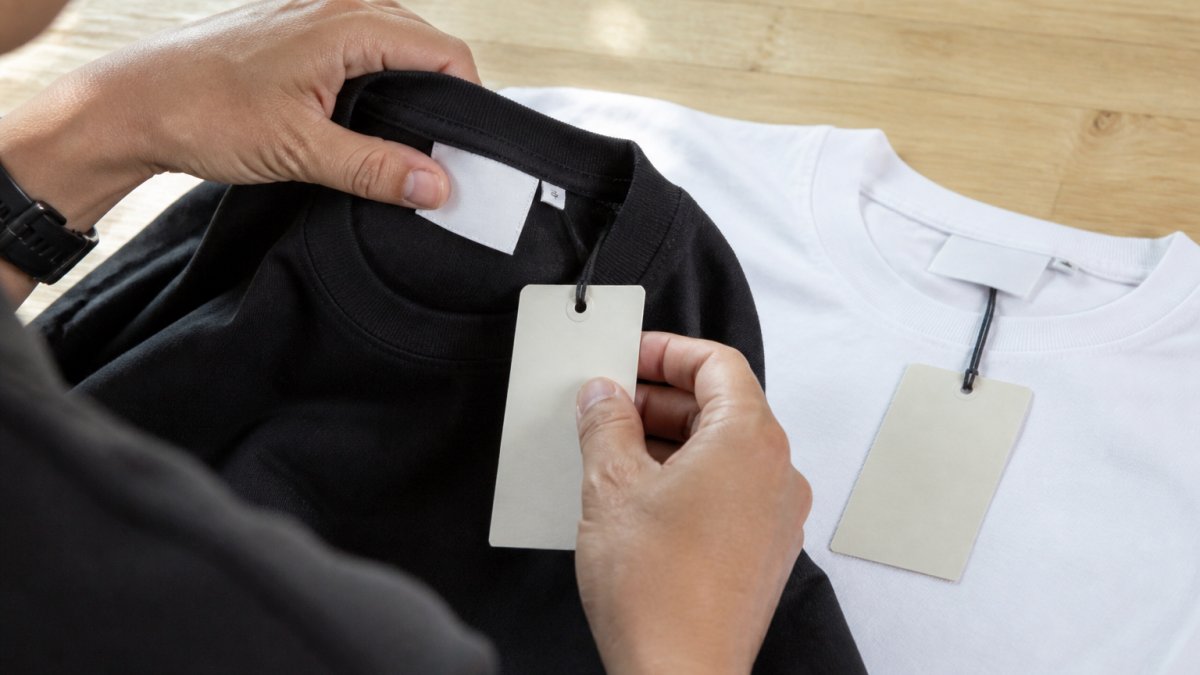
The label is where most fakes fall apart first. Authentic brands treat neck labels and hang tags as brand assets and print them with precision; counterfeiters reproduce them from photos, so small details get lost.
Checking Garment Labels and Tag Typography
Look at the font first. Real designer labels use clean, consistent typography: evenly spaced letters, correct spelling, a straight logo. Fakes show jagged letter edges, uneven spacing, or the wrong font weight.
Check the label material: authentic labels feel smooth and tightly woven, while knock-offs feel stiff, scratchy, or papery.
Serial Numbers and Other Identifying Details
Many premium brands print a serial number, style code, or production code on the interior label or a secondary tag, letting you verify the item against the brand's records. A missing, duplicated, or mismatched code is a strong warning sign, when in doubt, contact the brand's customer service with the code.
Inspect the Stitching: Stitch Consistency and Seam Quality
Stitching is the hardest thing for counterfeiters to fake at scale. Real designer T-shirts are sewn on calibrated industrial machines with tight quality control; fakes come from smaller operations with older machines and rushed operators.
Run your finger along the side seams, shoulder seams, and hem. Authentic stitching is even, with consistent thread tension and no loose threads or skipped stitches.
How Many Stitches Per Inch Should You See?
A common benchmark is roughly 10 to 12 stitches per inch on visible seams, below that, the seam is weak and prone to splitting. You do not need to count every stitch; hold the seam up to a light source and look for uniformity. If some sections look tight and others loose, the construction is inconsistent.
Assess Fabric Quality, Weight, and Feel
Fabric is where a fake can feel almost right but still miss.
Hold the shirt up to the light: real cotton has a soft, natural sheen, while cheap fabric looks flat or slightly shiny.
Weight matters too: a real designer tee has enough body to hold its shape on a hanger, and fabric thin enough to see your hand through is a warning sign.
Compare Logos, Graphics, and Placement With Official Product Photos
Logos and graphics are the most visible authenticity markers, which is exactly why counterfeiters focus on them. That also makes them easier to check if you know what to look for.
Pull up the official product photos and compare them side by side with the shirt. Check logo size, chest placement, and letter spacing, a logo half an inch too high or a graphic slightly too large is a common counterfeit indicator.
Look for Misspellings and Incorrect Text
Read every word on the shirt, tag, and packaging. Counterfeiters frequently misspell brand names, swap letters, or use the wrong trademark symbol, a missing accent mark or a slogan that is not quite right is a classic warning sign. If the text looks off, compare it against the official brand site before you buy.
Examine Hardware and Trims
Hardware and trims are everything on a T-shirt that is not fabric: zippers, buttons, snaps, drawcord tips and aglets, eyelets, rivets, woven side tags, and heat-transfer or rubberized patches. Designer brands spec these down to the millimeter and often use the same trim houses season after season, making hardware a reliable check, but also easy to misjudge if you assume every brand uses the same setup.
What to Look For on Zippers, Buttons, and Tips
Start with the zipper, if the shirt has one. On an authentic garment the pull is usually branded, the brand name, a monogram, or a house-specific shape, and feels solid, not hollow or tinny.
Buttons and snaps follow the same logic. Real designer buttons are engraved, debossed, or stamped with the brand mark and have consistent weight and finish.
Drawcord tips and aglets are a small detail counterfeiters routinely skip.
Armani Exchange Men's T-shirt Color White NEW WITH ORIGINAL TAGS →
Woven Tags, Patches, and Heat Transfers
Look at any woven side tag, hem tag, or interior brand patch. Authentic woven tags have a tight, readable weave, you can make out individual letters without squinting.
Heat-transfer and rubberized patches are the hardest trims to fake well. Real patches have clean edges and a matte or satin finish matching the brand's other products; fake patches have ragged edges, a too-glossy surface, or peel at the corner after one wash.
Finishing Details That Give Fakes Away
Finishing is where rushed production shows. On an authentic tee, the collar lies flat with even ribbing and a cleanly covered seam; on a fake, it ripples, twists, or stands away from the neck. A real hem is straight and evenly folded, while a fake hem is wavy or curls from too much tension. Check inside for exposed raw edges, loose thread tails, or serging that stops short of a seam.
Hardware Varies by Brand and Season, Do Not Assume
One important caveat: hardware is not universal. Some brands use unbranded YKK zippers on certain styles and branded pulls on others, switch from metal aglets to plastic between seasons, or use engraved buttons on mainline pieces and plain buttons on outlet lines.
The same caution applies to trims that differ from a shirt you already own. Production runs change: a 2023 tee and a 2025 tee from the same brand can have different buttons, tag placement, and aglet shapes, and both be authentic.
Fake vs. Real Designer T-Shirt: Counterfeit Indicators vs. Normal Manufacturing Variation
Not every small imperfection means the shirt is fake. Real garments vary too, and confusing normal manufacturing differences with counterfeit indicators leads to false accusations and unnecessary returns.
| What You Notice | Likely Counterfeit Indicator | Likely Normal Variation |
|---|---|---|
| Slightly uneven stitching | Yes, if widespread | No, if isolated and minor |
| Missing serial number | Yes | No, some brands omit them |
| Slight color difference from photo | Sometimes | Yes, screen calibration varies |
| Loose thread on one seam | No | Yes, common in real production |
| Wrong font on label | Yes | No |
| Fabric feels slightly different | Sometimes | Yes, across production runs |
The rule of thumb: one small issue is rarely enough. Three or more issues across different checks almost always means counterfeit.
Designer T-Shirt Authenticity Check: Your 7-Point Inspection Checklist
This is the part most guides skip: a single, shirt-specific workflow you can run in about five minutes, whether you are in a store, messaging a reseller, or opening a package at home. The seven points map to the checks above but are ordered by how quickly each rules a shirt in or out. Run them in sequence and stop early if two or three fail.
The 7-Point Checklist
- 1. Label and typography. Font is clean, spelling is correct, the brand mark sits straight, and the country of origin matches the brand's official listing for that style. Photograph the neck label and hang tag before removing either.
- 2. Serial number or style code. A production code, style code, or serial number is present on the interior label or a secondary tag, and it matches the style you are looking at. If the brand publishes a code lookup, use it. If not, contact the brand's customer service with the code and ask them to confirm the style.
- 3. Stitching and seams. Side seams, shoulder seams, and hems are even, with consistent thread tension and no skipped stitches. Hold the seam up to a light source, if some sections look tight and others loose, the construction is inconsistent.
How to Run the Checklist on a Secondhand Purchase
Secondhand is where the checklist earns its keep, because you usually cannot touch the shirt before you pay. Split the process into two passes: before you buy, and after the package arrives.
Before you buy. Ask the seller for a specific set of photos, in this priority order:
- A close-up of the interior neck label, shot straight on, in focus.
- A close-up of any secondary tag, serial number, or style code.
- A close-up of the chest logo or graphic, shot straight on, with a ruler or coin in frame for scale if possible.
- A close-up of the side seam and hem, ideally with the fabric held up to a light.
- A close-up of any hardware, zipper pull, buttons, aglets, woven side tag.
- A photo of the hang tag or original packaging, if the seller still has it.
- A photo of the seller's receipt or order confirmation, if they are willing to share it (redact personal details).
After the package arrives. Run the full seven-point checklist in person within the seller's return window, photographing every check, label, code, seams, fabric, logo, hardware, and packaging.
What Photos Cannot Tell You
Photo-based inspection has real limits. You cannot judge fabric weight, hand feel, or recovery from a photo, feel thread tension, hear a zipper grind, or smell the faint chemical odor that sometimes accompanies rushed dyeing and finishing.
Use photos to rule items out, not to rule them in. A shirt that fails a photo check is very likely a problem.
Safe Next Steps When a Shirt Seems Counterfeit
Visual inspection is not proof. It is a set of signals that, taken together, justify caution. If your checklist points to counterfeit, here is a practical sequence:
- Stop wearing or altering the item. Do not remove tags, wash it, or have it tailored, that can void a return.
- Document everything. Save your photos, the seller's listing, your messages, the payment record, and the shipping label. Screenshot the listing before the seller can edit or delete it.
- Contact the seller first, in writing. State the specific checks that failed, attach your photos, and request a return or refund under their stated policy. Keep the tone factual, you are documenting, not accusing.
- Escalate to the platform. If the seller does not resolve it, open a dispute through the marketplace or payment platform. Check the buyer-protection deadline and file before it closes.
- If you paid by credit card, know your options. Under the Fair Credit Billing Act, you generally have the right to dispute charges for goods not delivered as described, subject to the card issuer's process and deadlines.
- Report the listing. Most marketplaces have a reporting tool for counterfeit goods. It will not get your money back on its own, but it creates a record and can protect the next buyer.
- Consider reporting to the brand. Many brands have a counterfeits or brand-protection contact. A short email with your photos and the seller's listing helps the brand track patterns.
Frequently Asked Questions
How can you tell if a designer T-shirt is fake?
Start with the label. Check tag typography for clean, evenly spaced lettering and no misspellings. Then inspect stitch consistency along seams, compare the logo and graphic placement against official product photos, and feel the fabric weight. Counterfeit clothing often shows uneven stitching, blurry logos, and thin cotton that feels rough. If several of these signs appear together, treat the item as suspect and verify the seller before buying.
Can a designer T-shirt's stitching reveal whether it is counterfeit?
Yes. Authentic designer T-shirts typically have consistent stitches per inch, clean seam finishing, and no loose threads or skipped stitches. Counterfeit garments often show uneven stitch lines, wavy hems, and poorly finished interior seams. Turn the shirt inside out and check the armhole, side seam, and hem. If the stitch consistency varies noticeably or the seam quality looks rushed, that is a strong counterfeit warning sign.
Are designer T-shirts sold at unusually low prices likely to be fake?
A price far below typical retail is one of the most reliable counterfeit warning signs. Authentic designer T-shirts from brands like Armani Exchange, Calvin Klein, or Tommy Hilfiger usually sell in a consistent range, so a $200 shirt listed at $25 should raise suspicion. That said, legitimate discounts exist. Check whether the seller provides original tags, clear photos of labels and stitching, and a return policy before you buy.
How do you verify a designer T-shirt's label and tags?
Compare the tag typography, font weight, and spacing against official product photos from the manufacturer website. Look for misspellings, blurry printing, or inconsistent logo proportions. Check that the serial number or style code on the hang tag matches the interior label. Authentic garments have identifying details that align across every tag. If the numbers do not match or the printing looks cheap, the item is likely knock-off merchandise.
What should you do if you think a designer T-shirt is counterfeit?
Stop wearing it and document everything: photos of the label, stitching, logo, and any serial numbers. Contact the seller or retailer and request a return or refund, citing the specific defects you found. If you paid by credit card, you can dispute the charge. For online shopping purchases, most platforms have a counterfeit reporting process. Keep the original packaging and tags until the dispute is resolved.