
Luxury Streetwear vs Fast Fashion Quality: What Lasts
Table of Contents
- Luxury Streetwear vs Fast Fashion: The Quality Gap
- How to Tell If Clothes Are Good Quality Before You Buy
- The Best Fabric for Streetwear: What Actually Holds Up
- Streetwear Fabric Weight and GSM: Why It Decides Durability
- Construction and Craftsmanship: Stitching, Seams, and Finishing
- How Long Should Quality Clothes Last?
- Price, Cost Per Wear, and Value for Money
- Conclusion
- Frequently Asked Questions
Last Updated: October 18, 2026
Luxury Streetwear vs Fast Fashion: The Quality Gap
The quality gap between luxury streetwear and fast fashion comes down to three things: fabric weight, construction detail, and how many wears you get before the garment falls apart. At LFC DESIGNS ONE, we sell designer apparel new with original tags, so we see both sides up close. This guide breaks down luxury streetwear vs fast fashion quality using checks you can run in a store or on your couch, not marketing copy.
Fast fashion wins on upfront price and speed. Luxury streetwear wins on durability, material quality, and cost per wear. The gap is real but not automatic: plenty of expensive pieces are poorly made, and a few budget pieces hold up fine. The skill is telling them apart before you pay.
How to Tell If Clothes Are Good Quality Before You Buy
You can tell if clothes are good quality by checking four things in order: the fabric composition tag, the fabric weight in your hand, the seam stitching, and the finishing inside.
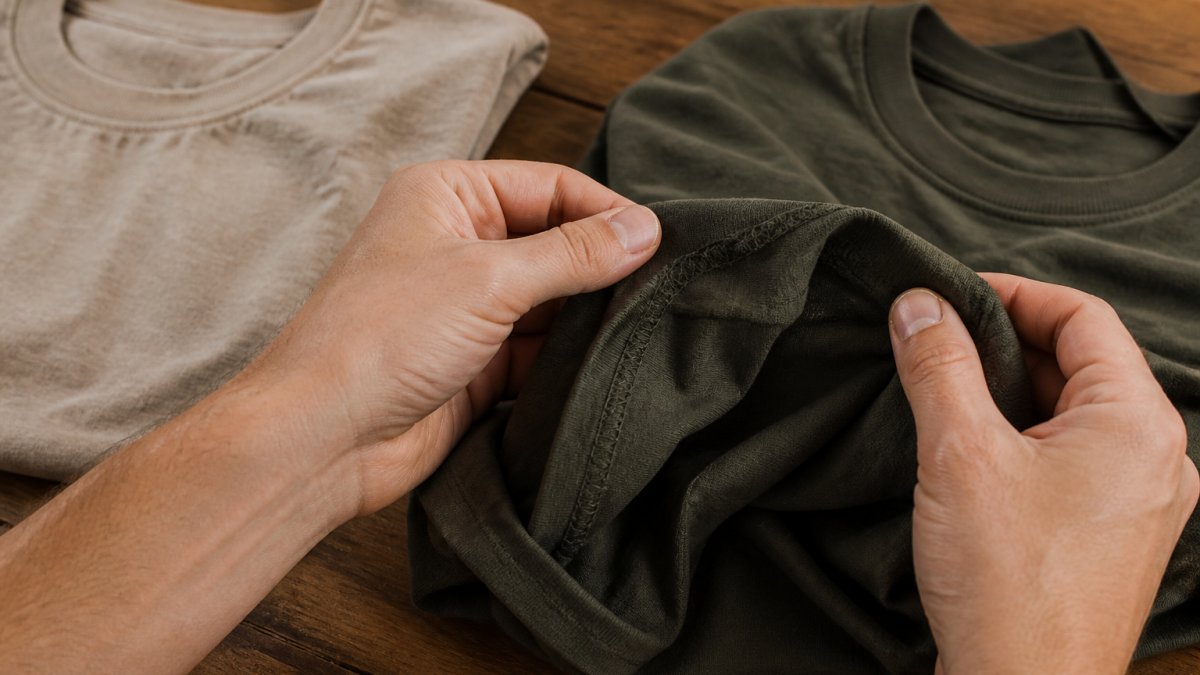
1. Read the composition tag like a spec sheet. A high cotton percentage with a small elastane blend usually signals a garment built to hold its shape.
2. Weigh the fabric in your hand. Hold it up to light and stretch it gently. Thin, see-through cotton in a dark color is a warning sign; heavier fabric resists sagging and see-through wear. Compare the hand-feel to something you already own and trust.
3. Inspect the seams inside and out. Flip the garment inside out. You want clean, dense stitching with no loose threads. Check the stress points, underarm, neckline, pocket corners, for reinforcement; a puckered or wavy seam will fail earlier.
4. Check the finishing. Hemmed edges, reinforced stress points, and a collar that springs back when folded mark a garment built to last. Raw, fraying seam allowances will unravel over time.
- Composition tag shows a clear, sensible fiber blend with percentages
- Fabric feels substantial, not papery or slick
- Seams are dense, straight, and trimmed clean
- Collar and cuffs hold their shape when stretched
- Buttons, zippers, and prints are securely attached
- Inside finishing is neat, not raw or fraying
- Stress points (underarm, pocket corners, neckline) are reinforced
- Hardware engages smoothly and feels solid
Verifying quality online. When you cannot touch the garment, the listing is your evidence. Look for a full composition breakdown, fabric weight in GSM or ounces, and close-up photos of seams and hardware.
Separate claims from evidence. "Premium quality," "luxury feel," and "crafted with care" are marketing claims, not specifications. Garment-level evidence is a composition percentage, a GSM number, a stitch count, a seam type, and a hardware brand. Evidence lets you judge; adjectives leave you guessing.
That checklist takes about 90 seconds in a store and works the same on luxury streetwear and fast fashion alike.
The Best Fabric for Streetwear: What Actually Holds Up
The best fabric for streetwear is heavyweight cotton, usually a cotton or cotton-poly blend in the 300 to 400 GSM range for hoodies and 180 to 220 GSM for tees. Cotton breathes, takes dye well, and holds screen print or embroidery without distorting.
Composition matters as much as type. A 100% cotton loopback fleece softens with washing and keeps its shape; a brushed polyester blend may feel plush at first, then pill and flatten.
For sneakers, leather overlays and rubber outsoles outlast thin synthetic uppers. The PUMA Rebound Retro Men's Sneakers list a rubber outsole, leather and synthetic upper, and textile lining, a durable mix for everyday wear at $82.99. Read that material breakdown before buying any shoe.

Streetwear Fabric Weight and GSM: Why It Decides Durability
Streetwear fabric weight and GSM decide durability because GSM, or grams per square meter, measures how much fabric you are getting. Higher GSM means denser, heavier cloth that resists stretching, sagging, and see-through wear; lower GSM feels comfortable but wears out faster.
Here is a rough guide for streetwear pieces:
| Garment | Lightweight | Midweight | Heavyweight |
|---|---|---|---|
| T-shirt | Under 150 GSM | 150-200 GSM | 200+ GSM |
| Hoodie / sweatshirt | Under 280 GSM | 280-350 GSM | 350+ GSM |
| Denim | Under 10 oz | 10-13 oz | 13+ oz |
Fast fashion sits at the low end of these ranges because lighter fabric costs less to produce and ship; luxury streetwear sits mid to high. The difference shows after a dozen washes, when the lightweight piece has twisted and thinned while the heavier one still hangs straight.
Construction and Craftsmanship: Stitching, Seams, and Finishing
Construction and craftsmanship separate a garment that lasts from one that does not, and in streetwear the differences show up in checkable places: stitch density, seam type, stress-point reinforcement, hardware, and print application.
Stitch density and stitch type. Stitch density is expressed as stitches per inch (SPI). Durable woven seams run roughly 10 to 12 SPI; knits often run 8 to 10 SPI with a stitch that stretches.
Seam type by fabric. Flatlock and coverstitch seams lie flat and stretch with knits, which is why they dominate hoodies and tees. Single-needle stitching is cleaner and stronger on wovens like denim and jackets but has little give on stretch fabric.
Stress-point reinforcement. Streetwear garments fail first at predictable spots: underarm gussets, neckline and collar attachment, pocket corners, zipper ends, and the crotch on pants. Bar tacks, rivets, extra stitching rows, or a taped seam there are strong quality signals.
PUMA Rebound Retro Men's Sneakers Color White Size 11 New In Box →
Hardware. Zippers, snaps, eyelets, and drawcord tips are where cheap construction hides. Metal zippers with smooth teeth and a branded pull outlast plastic coils that catch and split. Check that snaps engage firmly and eyelets are set, not crimped loosely.
Print and embroidery durability. Screen prints should be smooth, evenly cured, and free of cracks at the fold lines. A plasticky, thick print may crack after a few washes; a well-cured print flexes with the fabric.
Finishing inside the garment. Raw, fraying seam allowances unravel over time; well-finished garments have trimmed, bound, or overlocked seams that will not shed threads. Check the inside of the neckline and hem first, where corners get cut.
None of these checks require a lab, just knowing where to look. They work the same on a $30 piece and a $300 piece; garment-level evidence, not price tier, is what counts.
How Long Should Quality Clothes Last?
Quality clothes should last years, not months, when cared for properly. A well-constructed heavyweight cotton tee can survive a hundred or more washes, and a leather sneaker with a rubber outsole can go several seasons with basic care. A fast fashion equivalent often shows wear within a few months.
Longevity depends on fabric weight, construction quality, and garment care, and you control the third. Wash cold, inside out, and air dry when you can. Skip the dryer for anything with elastane, since heat breaks the fibers down. Store knits folded, not hung, so they do not stretch at the shoulders.
Price, Cost Per Wear, and Value for Money
Cost per wear is the number that matters: divide the price by the number of times you realistically wear the item. A $58.99 Armani Exchange tee worn 100 times costs about $0.59 per wear; a $15 fast fashion tee worn 10 times before it fades costs $1.50 per wear.
Run the math before deciding a price is high or low. Upfront price and value for money are different things; a higher price point can deliver better value if the garment survives far more wears. That is why cost per wear beats sticker price every time.
Here is how we would compare a few real pieces on that basis:
| Item | Price | Realistic Wears | Cost Per Wear |
|---|---|---|---|
| Armani Exchange cotton tee | $58.99 | 100+ | About $0.59 |
| PUMA Essentials tee | $28.99 | 60+ | About $0.48 |
| PUMA Rebound Retro sneakers | $82.99 | 200+ | About $0.41 |
The lesson is not that cheaper is worse. The number of wears decides value, and construction drives the number of wears. A budget piece built well can beat an expensive piece built badly.
Resale and repairability belong in the same calculation. Authentic designer pieces hold resale value far better than fast fashion, and a garment with solid seams can be repaired instead of replaced. Both lower your true cost over time.
Conclusion
The real challenge is not choosing between luxury and fast fashion. It is learning to read a garment before you pay for it. Fabric composition, fabric weight, seam construction, and finishing tell you more than any price tag.
At LFC DESIGNS ONE, we make that judgment easier by stocking authentic designer apparel new with original tags, shipped free across the USA. Browse our curated picks, check the composition and construction for yourself, and buy pieces built to earn their cost per wear.
Frequently Asked Questions
Are luxury brands actually better quality than fast fashion?
Not automatically. Luxury positioning does not guarantee better streetwear quality, and price tags are not proof of construction. What separates good from poor garments is measurable: fabric weight and composition, stitch density, seam type, and finishing. A heavyweight cotton tee from a mid-range label can outlast a lightweight designer piece with single-stitched seams. Check the fabric label, look for tight double-stitched hems, and inspect the inside of the garment before you assume a higher price means a better build.
How can you tell if streetwear is good quality in a store or online?
Start with the fabric label and the GSM. Heavier cotton knits (roughly 180 GSM and up for t-shirts) hold shape longer than thin ones. Then check construction: double-stitched hems, clean seam finishes, no loose threads, and a collar that springs back when stretched. Online, look for listings that show original tags, fabric composition, and close-up photos of stitching. A seller who shows the tag and the seam is usually selling something they can stand behind.
What is the best fabric for streetwear if I want it to last?
Cotton still leads for tees and hoodies, particularly heavier combed or ring-spun cotton that resists pilling. Cotton-polyester blends add shape retention and shrink resistance. For outerwear and sneakers, leather uppers and rubber outsoles give the longest service life. Avoid very thin, loosely knit fabrics regardless of the brand name on them, because they stretch out, pill, and lose shape within a few months of regular washing.
How long should quality clothes last compared to fast fashion?
A well-made streetwear t-shirt worn weekly and washed properly can hold its shape and color for two to three years. Fast fashion equivalents often show pilling, stretched collars, and faded prints within six to twelve months. Sneakers with leather uppers and rubber outsoles commonly outlast glued synthetic pairs by a year or more. The gap widens with care: cold washing, inside-out drying, and rotation extend the life of any garment.
Is luxury streetwear worth the price?
It depends on cost per wear, not the sticker price. A $59 Armani Exchange tee worn twice a week for two years costs about 57 cents per wear. A $12 fast fashion tee replaced every five months costs roughly the same or more, with worse fit and more waste. Luxury streetwear is worth it when the construction, fabric weight, and fit hold up over years. It is not worth it when you are paying only for a logo on a thin garment.
Quality should outlast the season. Shop the LFC DESIGNS ONE collection of authentic designer tees, polos, caps, and sneakers, all new with original tags and free shipping, and start building a wardrobe where every dollar works harder.